
Turfgrass for the World Cup
World Cup stadiums used standardized natural turfgrass to provide consistent ball performance and safe footing across 16 venues.
- Operations Management by Cachon & Terwiesch
- Operations and Supply Chain Management by Jacobs & Chase
- Operations and Supply Chain Management The Core by Jacobs & Chase
- Management of Quality
- Managing Quality
- Project Management
- Project Planning and Scheduling
- Projects
- Quality and SPC
- Quality Mgmt and 6S
- Operations Management in the Supply Chain by Schroeder & Goldstein
- Six Sigma Quality
- Operations Management by Stevenson
- Managing Operations Across the Supply Chain by Swink, Melnyk, Hartley & Cooper
- Blog
- Article
- OM in the News
- Higher Education
FIFA’s World Cup 2026 featured 48 teams playing in sixteen different stadiums, hosted by three countries: the United States, Canada, and Mexico.
One requirement of FIFA for the World Cup games is that stadiums and fields meet certain specifications, including that the field uses turfgrass. Each field must perform identically in terms of how the ball bounces and ensure safe footing.
Of the sixteen stadiums, eight normally used artificial turf, and five were domed with retractable roofs, adding complexity to meeting field specifications for the 2026 World Cup.
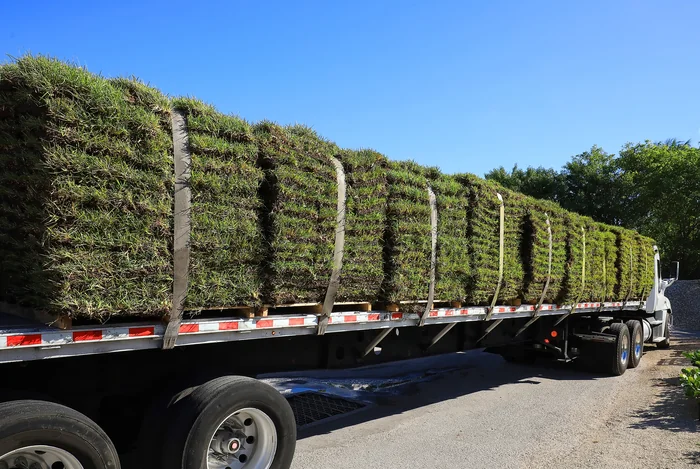
To meet FIFA’s standards, natural turf was grown off-site and transported, often over thousands of miles, in refrigerated trucks to the stadiums. A system called “sod-on-plastic” was used to allow the grass to be grown off-site, rolled up, and shipped to the stadiums.
Two types of grass blends can be used, depending on whether the climate is warm or cool.
Video Spotlight:
- Inside FIFA’s Race to Move Natural Grass to All 16 World Cup Stadiums | WSJ Tech Behind (June 9, 2026, The Wall Street Journal)
- NFL players gripe over grass surfaces for World Cup (May 12, 2026, FOX 4 Dallas-Fort Worth)
This post is based on the Detroit Free Press article, How Michigan State's 'Sultan of Sod' became World Cup Turfgrass Whisperer, by Christian Romo, June 11, 2026; the ESPN article, World Cup Grass in NFL Stadiums Stirs Debate Over Field Surface, by Jordan Raanan, June 12, 2026; and the YouTube videos in the Spotlight. Image source: Jillian Cain Photography/Shutterstock
Discussion Questions:
1. Should the eight stadiums stay converted from artificial turf for the NFL?
Guidance: Most NFL players would like to see the switch. Natural turf fields have long been an item of interest to NFL players. Although the difference in injuries is similar for natural and artificial turf fields, many players claim that artificial turf is tougher on joints. So, why don’t NFL teams change to natural turf?
There are a variety of tradeoffs between the two.
Artificial turf requires a larger initial investment, but ongoing maintenance costs are lower than natural turf. It also drains well and provides a consistent surface regardless of weather. Moreover, it does not require frequent watering.
Artificial turf is especially popular with NFL teams because it can accommodate more frequent use and a wider range of events. Natural turfgrass, by contrast, needs more recovery time between events because it is more prone to wear. Increased usage of an expensive stadium is an economic benefit to the teams.
2. Are the characteristics of turfgrass the same for the World Cup and the NFL?
Guidance: Although there are many similar characteristics, there are differences. One important consideration is that most NFL stadiums are multipurpose venues. Multiple teams may play at one stadium. For example, the University of South Florida plays at Raymond James Stadium, which is also the home of the NFL’s Tampa Bay Buccaneers.
Additional events, such as concerts, monster truck rallies, rodeos, motor sports, and community events, are held at these stadiums.
Another consideration is the sport itself. In soccer, a consistent bounce of the ball is critical and one of the criteria specified by FIFA. This is not as critical to the NFL.
Good footing is a characteristic that both sports require. However, the average World Cup soccer player is approximately 6 feet tall and 175 pounds. NFL players are substantially larger, with offensive linemen typically being over 300 pounds. As a result, good footing and its associated requirements differ between the two sports.
The field's ability to handle weather conditions, including drainage characteristics, is also important to both sports. Heavy rainfall must be removed promptly to maintain safe footing for players and extend the field's longevity. However, the impact of inclement weather is different between the two sports, because the World Cup is traditionally played during the summer, while the NFL plays primarily in the fall, and weather conditions have different impacts on the field.
3. Why did stadiums start working on the turfgrass for the World Cup several years ago?
Guidance: Although turfgrass has been grown for indoor use, starting with the Pontiac Silverdome in 1975, the World Cup required the development of special turfgrass for the event, based on FIFA's specifications, and the location and type of stadiums involved. It took more than seven years to develop the techniques and turfgrass.
4. Why is project management the right approach to manage the World Cup? How should a work breakdown structure be used?
Guidance: The World Cup is held every 4 years and is rotated between countries. The 2026 games were hosted by the United States, Canada, and Mexico. 2030 will be hosted by Morocco, Portugal, and Spain, with opening matches in Argentina, Paraguay, and Uruguay. As each World Cup brings different challenges due to varying locations, thousands of workers, millions of spectators, many stakeholders, and complex broadcast requirements, a project management approach is best for managing such a large and complex event.
A work breakdown structure (WBS) is a logical approach for identifying the project's activities. Years before the World Cup starts, many activities have to be completed.
The selection of host countries is among the first activities to take place. Part of this decision involves the availability of stadiums or the willingness to build them. Other decisions that need to be made early include the number of teams that will play and the competition format. Requirements for the stadiums, including technology, turfgrass, security systems, and other improvements to existing fields, should be an early consideration.
As the event approaches, preparations will focus on the stadium, transportation, security, customs, ticketing, and staffing.
Government and businesses near the stadiums will also need to prepare for the arrival of fans. Special events should also be planned for fans.
Local businesses may need to add capacity, staff, and inventory leading up to and during the event.

