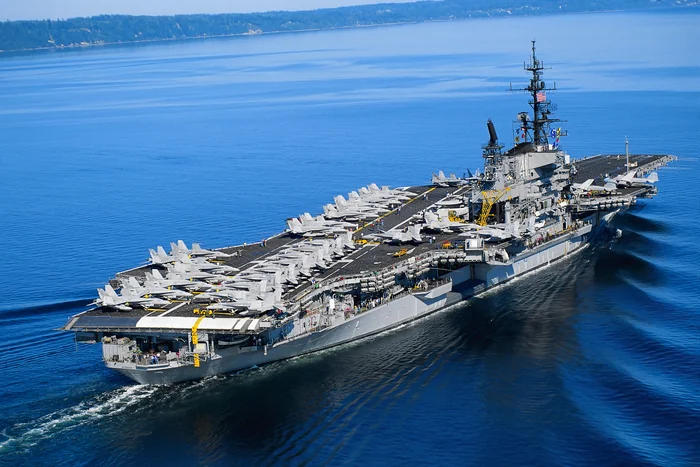
The US Navy will use wall-climbing robots to inspect Pacific Fleet vessels faster and more safely under a five-year contract.
Tags
Operations Management by Cachon & Terwiesch
Capacity Planning
Operations and Supply Chain Management by Jacobs & Chase
Operations and Supply Chain Management The Core by Jacobs & Chase
Management of Quality
Managing Processes and Capacity
Managing Quality
Process Analysis
Quality and SPC
Quality Mgmt and 6S
Operations Management in the Supply Chain by Schroeder & Goldstein
Six Sigma Quality
Operations Management by Stevenson
Strategic Capacity Management
Strategic Capacity Planning
Managing Operations Across the Supply Chain by Swink, Melnyk, Hartley & Cooper
Blog
Article
OM in the News
Higher Education
The U.S. Navy recently agreed to a five-year, $54 million contract with Gecko Robotics.
The company will employ its wall-scaling robots to perform maintenance inspections on 18 of the vessels in the U.S. Pacific Fleet. The AI powered robots scour ship hulls and flight decks, identifying needed repairs more quickly and often times more safely than humans can.
1. How is Gecko’s technology poised to play a strategically important role in the Navy’s preventive maintenance program and capacity planning for its vessels?
Guidance: Currently, the U.S. Navy has about 300 warships and submarines, compared to China’s estimated 370 to 390. China also has the capacity to build new ships more rapidly than the U.S., which is plagued by worker shortages as well as high turnover of shipyard personnel like welders and electricians.
Using the AI robots to perform inspections frees up the limited supply of human workers to focus on other tasks, such as executing the repairs or constructing new ships. This can help increase the potential shipbuilding capacity of the United States.
In addition, only about 60 percent of U.S. naval ships are functional at any given time due to vessels being dry docked for maintenance. If maintenance activities can be sped up and completed with greater accuracy and thoroughness, this will increase the number of operational vessels, helping achieve the Navy’s goal of 80 percent fleet readiness by next year.
In general, preventive maintenance tends to be more cost effective and less disruptive than breakdown maintenance (money spent after a breakdown on repairs), so the more effective the preventive maintenance program, hopefully the fewer times ships must be taken out of service for repair.
2. What can Gecko’s AI robots do?
Guidance: The robots easily maneuver along hard to reach areas of the ships, which would require humans to use scaffolding or ropes to access. They gather millions of data points regarding things like corrosion or weld defects, which are used to identify problems early so repairs can be made before they escalate into even bigger problems. Thus, the work is performed more quickly, safely, and thoroughly than by humans.
These same techniques can also be used as ships are being built to ensure that they are being made correctly and to reduce needed rework and repairs in the future.
Author: Lisa M. Spencer
California State University, Fresno
Craig School of Business
Lecturer
Share:
Regional Page Available
It looks like you're outside the United States. Do you want to see your regional version of this page?
Education Topics
Education Topics/Courses
Education Topics/Courses/OM in the News
Education Topics/Courses/OM in the News/Title
Education Topics/Courses/OM in the News/Title/Operations and Supply Chain Management by Jacobs & Chase
Education Topics/Courses/OM in the News/Title/Operations and Supply Chain Management The Core by Jacobs & Chase
Education Topics/Courses/OM in the News/Title/Operations Management by Stevenson
Education Topics/Courses/OM in the News/Topic
Education Topics/Courses/OM in the News/Topic/Managing Quality
Business Unit
Business Unit/Higher Education
Education Topics/Courses/OM in the News/Topic/Capacity Planning
Education Topics/Courses/OM in the News/Topic/Process Analysis
Education Topics/Courses/OM in the News/Topic/Quality and SPC
Education Topics/Courses/OM in the News/Topic/Strategic Capacity Management
Asset Format Type
Asset Format Type/Blog
Education Topics/Courses/OM in the News/Topic/Six Sigma Quality
Education Topics/Courses/OM in the News/Topic/Strategic Capacity Planning
Education Topics/Courses/OM in the News/Topic/Management of Quality
Education Topics/Courses/OM in the News/Title/Operations Management by Cachon & Terwiesch
Asset Format Type/Blog/Article
Education Topics/Courses/OM in the News/Topic/Quality Mgmt and 6S
Education Topics/Courses/OM in the News/Title/Managing Operations Across the Supply Chain by Swink, Melnyk, Hartley & Cooper
Education Topics/Courses/OM in the News/Title/Operations Management in the Supply Chain by Schroeder & Goldstein
Education Topics/Courses/OM in the News/Topic/Managing Processes and Capacity
highered
2026-11-17T16:23:42.021Z
highered U.S. Navy Using Robots for Inspections The US Navy will use wall-climbing robots to inspect Pacific Fleet vessels faster and more safely under a five-year contract. U.S. Navy Using Robots for Inspections The US Navy will use wall-climbing robots to inspect Pacific Fleet vessels faster and more safely under a five-year contract. Tags Operations Management by Cachon & Terwiesch Capacity Planning Operations and Supply Chain Management by Jacobs & Chase Operations and Supply Chain Management The Core by Jacobs & Chase Management of Quality Managing Processes and Capacity Managing Quality Process Analysis Quality and SPC Quality Mgmt and 6S Operations Management in the Supply Chain by Schroeder & Goldstein Six Sigma Quality Operations Management by Stevenson Strategic Capacity Management Strategic Capacity Planning Managing Operations Across the Supply Chain by Swink, Melnyk, Hartley & Cooper Blog Article OM in the News Higher Education More Article Type: Blog April 12, 2026 Share: The U.S. Navy recently agreed to a five-year, $54 million contract with Gecko Robotics. The company will employ its wall-scaling robots to perform maintenance inspections on 18 of the vessels in the U.S. Pacific Fleet. The AI powered robots scour ship hulls and flight decks, identifying needed repairs more quickly and often times more safely than humans can. Video Spotlight: Gecko Robotics Inks $71 Million Deal With US Navy (Mar 17, 2026, Bloomberg Technology) Gecko: Technology for Infrastructure Reliability (July 19, 2023, Gecko Robotics) This post is based on the FOX News article, Wall-climbing robot swarms crawl US Navy warships as China’s fleet surges, by Morgan Phillips, March 17, 2026, and the YouTube videos in the Spotlight. Image source: Getty Images/Stocktrek Images Discussion Questions: 1. How is Gecko’s technology poised to play a strategically important role in the Navy’s preventive maintenance program and capacity planning for its vessels? Guidance: Currently, the U.S. Navy has about 300 warships and submarines, compared to China’s estimated 370 to 390. China also has the capacity to build new ships more rapidly than the U.S., which is plagued by worker shortages as well as high turnover of shipyard personnel like welders and electricians. Using the AI robots to perform inspections frees up the limited supply of human workers to focus on other tasks, such as executing the repairs or constructing new ships. This can help increase the potential shipbuilding capacity of the United States. In addition, only about 60 percent of U.S. naval ships are functional at any given time due to vessels being dry docked for maintenance. If maintenance activities can be sped up and completed with greater accuracy and thoroughness, this will increase the number of operational vessels, helping achieve the Navy’s goal of 80 percent fleet readiness by next year. In general, preventive maintenance tends to be more cost effective and less disruptive than breakdown maintenance (money spent after a breakdown on repairs), so the more effective the preventive maintenance program, hopefully the fewer times ships must be taken out of service for repair. 2. What can Gecko’s AI robots do? Guidance: The robots easily maneuver along hard to reach areas of the ships, which would require humans to use scaffolding or ropes to access. They gather millions of data points regarding things like corrosion or weld defects, which are used to identify problems early so repairs can be made before they escalate into even bigger problems. Thus, the work is performed more quickly, safely, and thoroughly than by humans. These same techniques can also be used as ships are being built to ensure that they are being made correctly and to reduce needed rework and repairs in the future. About the Author Lisa M. Spencer California State University, Fresno Craig School of Business Lecturer Lisa M. Spencer California State University, Fresno Craig School of Business Lecturer
The US Navy will use wall-climbing robots to inspect Pacific Fleet vessels faster and more safely under a five-year contract.
Operations and Supply Chain Management by Jacobs & Chase, Operations and Supply Chain Management The Core by Jacobs & Chase, Operations Management by Stevenson, Managing Quality, Higher Education, Capacity Planning, Process Analysis, Quality and SPC, Strategic Capacity Management, Blog, Six Sigma Quality, OM in the News, Strategic Capacity Planning, Management of Quality, Operations Management by Cachon & Terwiesch, Article, Quality Mgmt and 6S, Managing Operations Across the Supply Chain by Swink, Melnyk, Hartley & Cooper, Operations Management in the Supply Chain by Schroeder & Goldstein, Managing Processes and Capacity