
Labor Shortages and Aging Farmers Lead to Ag 4.0
Agriculture 4.0 uses AI, drones, and automation to help aging farmers overcome labor shortages while improving productivity and sustainability.
- Operations Management by Cachon & Terwiesch
- Competitiveness Strategy Productivity
- Operations and Supply Chain Management by Jacobs & Chase
- Operations and Supply Chain Management The Core by Jacobs & Chase
- Manufacturing and Svc Process Structures
- Manufacturing Processes
- OPS and Supply Chain Strategy
- Process Improvement
- Process Selection
- Process Selection and Facility Layout
- Operations Management in the Supply Chain by Schroeder & Goldstein
- Operations Management by Stevenson
- Strategy
- Strategy and Sustainability
- Supply Chain Management
- Managing Operations Across the Supply Chain by Swink, Melnyk, Hartley & Cooper
- Blog
- Article
- OM in the News
- Higher Education
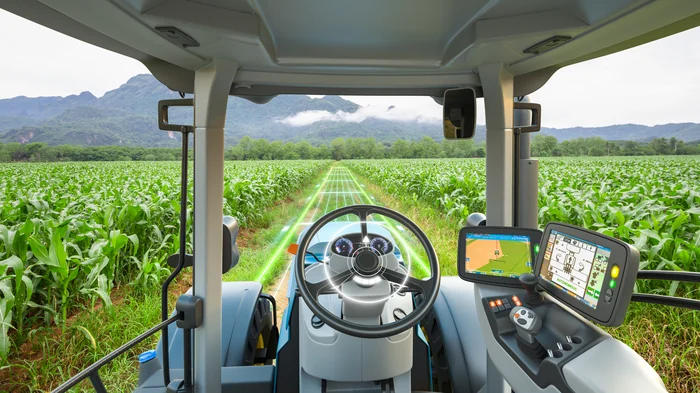
Agriculture 4.0, or the fourth generation of agricultural revolution, focuses on sustainability, productivity, and efficiency.
As farmers age and face challenges of labor shortages and higher costs, new approaches are needed to increase the food supply to feed an ever-enlarging global population. AI, drones, and automation are helping farmers plan, plant, grow, and harvest in a much more informed and precise way.
Video Spotlight:
- 4th Agricultural Revolution (Agriculture 4.0) (Jan 26, 2026, Mr. G-History)
- See & Spray Gen 2 – The Next Generation Is Here (Feb 27, 2026, John Deere)
This post is based on the Farm Progress article, Artificial Intelligence powering 4th Agricultural Revolution , by Andy Castillo, February 22, 2026; the Nebraska News Service article, AI-griculture: How artificial intelligence is amplifying the ag industry, by Danielle Smith, February 23, 2026; and the YouTube videos in the Spotlight. Image source: Suwin66/Shutterstock
Discussion Questions:
1. How does the fourth agricultural revolution differ from the third? How can AI enhance productivity and crop yield while reducing costs?
Guidance: New farming techniques in the 1940’s brought bigger machinery, higher yielding seeds, and advances in chemical fertilizers, pesticides, and irrigation. This was known as the “3rd agricultural revolution.”
Today, advances with AI, drones, and automated equipment give access to huge data sets and precise use of resources never before possible. Drones and AI can help farmers gather and interpret huge volumes of sensor data about soil, weeds, water, and crops.
Growers can farm more cost effectively and more sustainably by targeting precise areas that need resources and sparing others that don’t. For example, high tech tractors can navigate fields using GPS technology. They can cover fields with little overlap, thus saving time and fuel. Massive spray rigs operate by using cameras and sensors both day and night, precisely dispersing chemical herbicides only where weeds exist and slashing costs as a result. Also in the works is equipment that could use camera technology to identify specific kinds of weeds and remove them mechanically.
Finally, farmers are using data analytics of soil samples taken from locations all over their fields, determining their nutrient content, and creating detailed maps that will enable precise targeting of fertilizers exactly where they are needed.
2. What ethical challenges are posed as agriculture moves into its fourth revolution?
Guidance: Transparency and ownership of data are key concerns. In part, this is already being addressed, as manufacturers have farmers sign agreements stating whether they consent to share their data.
Another issue is who is liable, the farmer or the manufacturer, if automated equipment damages property or injures people.
One also wonders if smaller farmers will be as able to afford the new technology, or if farming will mainly be taken over by larger entities.
Lastly, as is typical with AI in any field, some workers will no longer be needed, but it is important to remember that new jobs are being created in other fields.

