
Is Vertical Integration the Key to Mixue's Global Success?
Mixue uses vertical integration and low prices to support more than 45,000 stores, making it the world's largest food chain by location count.
- Operations Management by Cachon & Terwiesch
- Competitiveness Strategy Productivity
- Global Logistics
- Operations and Supply Chain Management by Jacobs & Chase
- Operations and Supply Chain Management The Core by Jacobs & Chase
- Location Logistics and Distribution
- Location Planning and Analysis
- Logistics Mgmt
- Logistics Distribution Transportation
- New Product Development
- OPS and Supply Chain Strategy
- Operations Management in the Supply Chain by Schroeder & Goldstein
- Operations Management by Stevenson
- Strategy
- Strategy and Sustainability
- Supply Chain Management
- Managing Operations Across the Supply Chain by Swink, Melnyk, Hartley & Cooper
- Blog
- Article
- OM in the News
- Higher Education
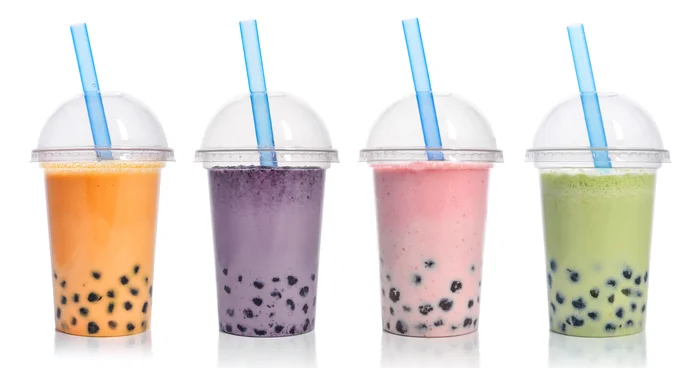
Though McDonald’s still reigns supreme in terms of total sales, China’s Mixue has become the world’s largest food and beverage chain by store count with over 45,000 global locations.
In December 2025, Mixue opened its first U.S. locations in Los Angeles and New York. The chain sells its famous soft-serve ice cream products, lemonades, and boba teas at rock bottom prices, and those products have been largely responsible for fueling the company’s rapid growth.
Video Spotlight:
- Trying MIXUE ICE CREAM New York City (Jan 11, 2026, Ambient New York - Matt Pierce)
- The Rise of Mixue Ice Cream and Tea - How it Became Number One (Mar 11, 2025, BizOne)
- From $1 Cones to Billions: The Rise of Mixue (Jan 22, 2025, East Money)
This post is based on the Quartz article, This China Food chain is bigger than McDonald’s—and it’s coming to America., by Chris Morris, February 23, 2026; the Momentum article, The story of Mixue — a supply chain 🏭 empire built by Chinese grassroots, by Sam Tang, March 2, 2025; and the YouTube videos in the Spotlight. Image source: mama_mia/Shutterstock
Discussion Questions:
1. What strategies are at the heart of Mixue’s business model, and how does it execute them in day-to-day operations?
Guidance: Low cost/low price and quality are two key strategies for Mixue. It has brought affordable ice-cream, tea, and lemonades to consumers throughout China and other parts of Southeast Asia.
The standard of living and average income in developing countries are considerably lower than in the United States, and Mixue’s treats are much more affordable than those of competitors such as McDonald’s and Starbucks. While Western businesses hold a certain allure for Chinese consumers, their higher price points often mean they are more a treat for a special occasion than an everyday purchase. With Mixue’s ultra-low prices, consumers can afford a treat much more often.
Quality is also another important part of Mixue’s strategy. Quality, as well as low prices, are maintained by being vertically integrated and eliminating many of the costs that get added on as products pass through the value chain. Since Mixue eliminates many middlemen, it can ensure the quality of what it sends to its stores while keeping the costs down.
Consistent quality is maintained because all franchisees must purchase what they need directly from Mixue, ensuring a predictable experience for customers each time they visit one of the stores.
2. How has Mixue fueled its rapid growth strategy? What locations has it targeted during its expansion?
Guidance: Mixue has grown from approximately 1,000 stores in China in 2014, to over 45,000 stores across multiple countries in 2026.
Mixue keeps franchise costs affordable to fuel its rapid growth. Presently, only about 20 stores are company owned, and the rest are owned by franchisees. Those who want to own a franchise must attend and pass training classes and pay a franchise fee, which compared to those of other big food and beverage chains, is surprisingly low. Thus, it has grown rapidly by making it easy for those who want to own a Mixue to do so.
Though the company has lost money in some markets due to such a rapid expansion strategy and the difficulty of gaining a foothold when competition exists, overall, the company has been very successful.
Mixue generally does not require franchisees to pay royalties on their sales. Instead, it makes an estimated 97% of its money by being vertically integrated and selling all supplies and equipment to its franchisees. Mixue grows some of its own fruit, such as the lemons for its lemonade, as well as its own tea. It has company-owned production facilities that make its boba and brew its tea, among other things. It is reported to produce 60% of its own ingredients, which is high for a food and beverage chain.
By selling all the required supplies and ingredients to its franchisees, it simplifies ownership for the franchisees while ensuring a steady revenue stream. Mixue also owns its own warehouses and delivery network for its stores in China.
After blanketing the market in China with its ultra-affordable ice cream, Mixue expanded to Vietnam. By 2023, within five years of entering the market, it had over 1,000 stores, making it the country’s biggest beverage chain. When it moved into Indonesia, the price point for its ice cream was actually similar to that of competitors, but the quality was perceived as better.
Mixue has also found success in Japan and South Korea, where young customers love the mascot and the trendy vibe of the store. The “Snow King” mascot himself is often tailored to reflect local costumes or traditions.
When entering the Australian market, prices were significantly higher than in China or Vietnam, but still more affordable than other options from competitors. The same is true for the Los Angeles location and the two in New York which recently opened to sizable crowds.
Within a particular country, Mixue chooses sites in part based on demographics. It likes to locate near universities and shopping centers to attract young, trendy customers. Mixue markets its products heavily through social media and by creating local content which its younger consumers love. Mixue also often partners with local business partners who speak Chinese and can bridge the gap between Mixue’s business model and local culture, preferences, and regulations.

