Deere & Co. Expands US-Based Distribution and Production
Deere plans a new Indiana distribution center and North Carolina excavator factory as part of a major US manufacturing expansion.
Tags
Operations Management by Cachon & Terwiesch
Competitiveness Strategy Productivity
Intro to Processes
Operations and Supply Chain Management by Jacobs & Chase
Operations and Supply Chain Management The Core by Jacobs & Chase
Manufacturing and Svc Process Structures
Manufacturing Processes
OPS and Supply Chain Strategy
Process Analysis
Process Selection
Process Selection and Facility Layout
Operations Management in the Supply Chain by Schroeder & Goldstein
Operations Management by Stevenson
Strategy
Strategy and Sustainability
Managing Operations Across the Supply Chain by Swink, Melnyk, Hartley & Cooper
Blog
Article
OM in the News
Higher Education
Equipment maker Deere & Co. plans to open both a new distribution center and an excavator factory that will bolster U.S. manufacturing.
Deere recently broke ground on a distribution center in Indiana, and plans to open a manufacturing facility in North Carolina in 2027. Total investments exceeding $20B are planned in U.S. manufacturing over the next 10 years, focused on new product development, cutting-edge technologies and more advanced manufacturing. This strategic investment would leverage a broad base of U.S. assets, including more than 60 facilities across 16 states.
The North Carolina facility will replace production currently located in Japan, and will leverage advanced technologies to produce excavators for the construction market. Domestic production continues to be a priority for the Trump Administration.
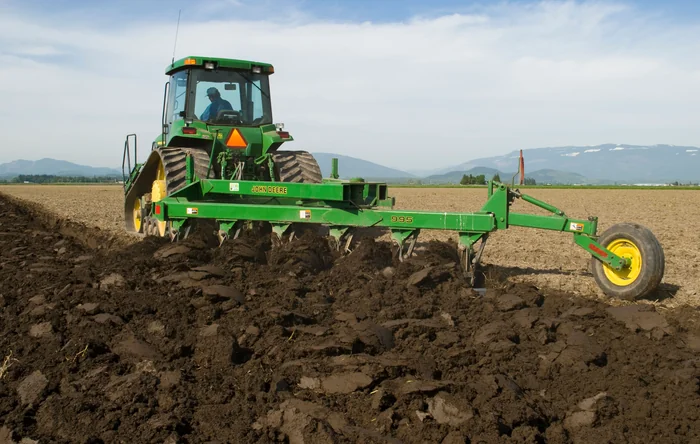
This post is based on the Supply Chain Dive article, Deere to open two facilities in $20B US manufacturing drive, by Antone Gonsalves, February 3, 2026, and the YouTube video in the Spotlight. Image source: Image Source Limited/Alamy Stock Photo
Discussion Questions:
1. What is meant by advanced manufacturing? Give examples, including some key benefits.
Guidance: Advanced manufacturing uses innovative technologies like AI, robotics, 3D printing, and data analytics to make production more efficient, precise, and flexible, creating new products and improving existing ones for better quality and competitiveness. It's an evolution of traditional methods, focusing on digital integration and automation to optimize the entire production lifecycle, from design to end-of-life. Advanced manufacturing can include production activities that depend on information, automation, computation, software, sensing, and networking.
One benefit is enhanced productivity and quality through faster production, fewer defects, and higher consistency.
Another benefit is greater flexibility, with the ability to quickly adapt to changing demands and to customize products.
2. What are other supply chain implications in Deere increasing domestic production?
Guidance: Deere may need to identify new upstream trading partners (suppliers) to shorten/streamline its supply pipeline, and to benefit from no or lower tariffs on parts and components.
Depending on the percentage of excavators bought domestically, it could lead to cost reductions in logistics (transportation, warehousing, and packaging) from reduced reliance on international shipments.
Local manufacturing helps companies avoid international tariffs, customs delays, and long-distance shipping issues, strengthening supply chain resilience.
Author: James Kirby Easterling, DBA
Eastern Kentucky University
Program Director, Global Supply Chain Management
Associate Professor and Executive-in-Residence
Share:
Regional Page Available
It looks like you're outside the United States. Do you want to see your regional version of this page?
Education Topics
Education Topics/Courses
Education Topics/Courses/OM in the News
Education Topics/Courses/OM in the News/Title
Education Topics/Courses/OM in the News/Title/Operations and Supply Chain Management by Jacobs & Chase
Education Topics/Courses/OM in the News/Title/Operations and Supply Chain Management The Core by Jacobs & Chase
Education Topics/Courses/OM in the News/Title/Operations Management by Stevenson
Business Unit
Business Unit/Higher Education
Education Topics/Courses/OM in the News/Topic
Education Topics/Courses/OM in the News/Topic/Process Analysis
Asset Format Type
Asset Format Type/Blog
Education Topics/Courses/OM in the News/Topic/Process Selection
Education Topics/Courses/OM in the News/Topic/OPS and Supply Chain Strategy
Education Topics/Courses/OM in the News/Topic/Process Selection and Facility Layout
Education Topics/Courses/OM in the News/Topic/Manufacturing and Svc Process Structures
Education Topics/Courses/OM in the News/Topic/Intro to Processes
Education Topics/Courses/OM in the News/Topic/Strategy
Education Topics/Courses/OM in the News/Topic/Manufacturing Processes
Education Topics/Courses/OM in the News/Topic/Competitiveness Strategy Productivity
Education Topics/Courses/OM in the News/Topic/Strategy and Sustainability
Education Topics/Courses/OM in the News/Title/Operations Management by Cachon & Terwiesch
Asset Format Type/Blog/Article
Education Topics/Courses/OM in the News/Title/Managing Operations Across the Supply Chain by Swink, Melnyk, Hartley & Cooper
Education Topics/Courses/OM in the News/Title/Operations Management in the Supply Chain by Schroeder & Goldstein
highered
2026-11-06T17:19:21.938Z
highered Deere & Co. Expands US-Based Distribution and Production Deere plans a new Indiana distribution center and North Carolina excavator factory as part of a major US manufacturing expansion. Equipment maker Deere & Co. plans to open both a new distribution center and an excavator factory that will bolster U.S. manufacturing. Deere recently broke ground on a distribution center in Indiana, and plans to open a manufacturing facility in North Carolina in 2027. Total investments exceeding $20B are planned in U.S. manufacturing over the next 10 years, focused on new product development, cutting-edge technologies and more advanced manufacturing. This strategic investment would leverage a broad base of U.S. assets, including more than 60 facilities across 16 states. The North Carolina facility will replace production currently located in Japan, and will leverage advanced technologies to produce excavators for the construction market. Domestic production continues to be a priority for the Trump Administration. Video Spotlight: Excavator Factory Expansion | John Deere (Jan 28, 2026, John Deere) This post is based on the Supply Chain Dive article, Deere to open two facilities in $20B US manufacturing drive, by Antone Gonsalves, February 3, 2026, and the YouTube video in the Spotlight. Image source: Image Source Limited/Alamy Stock Photo Discussion Questions: 1. What is meant by advanced manufacturing? Give examples, including some key benefits. Guidance: Advanced manufacturing uses innovative technologies like AI, robotics, 3D printing, and data analytics to make production more efficient, precise, and flexible, creating new products and improving existing ones for better quality and competitiveness. It's an evolution of traditional methods, focusing on digital integration and automation to optimize the entire production lifecycle, from design to end-of-life. Advanced manufacturing can include production activities that depend on information, automation, computation, software, sensing, and networking. One benefit is enhanced productivity and quality through faster production, fewer defects, and higher consistency. Another benefit is greater flexibility, with the ability to quickly adapt to changing demands and to customize products. 2. What are other supply chain implications in Deere increasing domestic production? Guidance: Deere may need to identify new upstream trading partners (suppliers) to shorten/streamline its supply pipeline, and to benefit from no or lower tariffs on parts and components. Depending on the percentage of excavators bought domestically, it could lead to cost reductions in logistics (transportation, warehousing, and packaging) from reduced reliance on international shipments. Local manufacturing helps companies avoid international tariffs, customs delays, and long-distance shipping issues, strengthening supply chain resilience. James Kirby Easterling, DBA Eastern Kentucky University Program Director, Global Supply Chain Management Associate Professor and Executive-in-Residence
Deere plans a new Indiana distribution center and North Carolina excavator factory as part of a major US manufacturing expansion.
Operations and Supply Chain Management by Jacobs & Chase, Operations and Supply Chain Management The Core by Jacobs & Chase, Operations Management by Stevenson, Higher Education, Process Analysis, Blog, Process Selection, OPS and Supply Chain Strategy, OM in the News, Process Selection and Facility Layout, Manufacturing and Svc Process Structures, Intro to Processes, Strategy, Manufacturing Processes, Competitiveness Strategy Productivity, Strategy and Sustainability, Operations Management by Cachon & Terwiesch, Article, Managing Operations Across the Supply Chain by Swink, Melnyk, Hartley & Cooper, Operations Management in the Supply Chain by Schroeder & Goldstein