Why Kroger Is Pivoting Its Supply Chain Strategy
Kroger is closing three automated fulfillment centers and shifting toward third-party delivery after reassessing its e-commerce network.
- Operations Management by Cachon & Terwiesch
- Competitiveness Strategy Productivity
- Global Logistics
- Operations and Supply Chain Management by Jacobs & Chase
- Operations and Supply Chain Management The Core by Jacobs & Chase
- Location Logistics and Distribution
- Logistics Mgmt
- Logistics Distribution Transportation
- OPS and Supply Chain Strategy
- Operations Management in the Supply Chain by Schroeder & Goldstein
- Operations Management by Stevenson
- Strategy
- Strategy and Sustainability
- Supply Chain Management
- Managing Operations Across the Supply Chain by Swink, Melnyk, Hartley & Cooper
- Blog
- Article
- OM in the News
- Higher Education
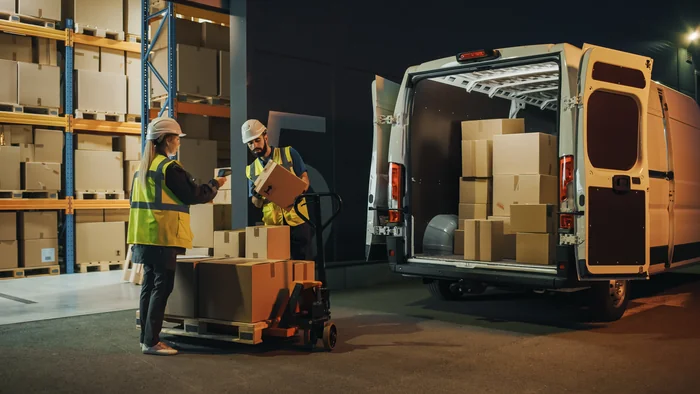
A few years ago, Kroger announced plans to leverage Customer Fulfillment Centers (CFCs) to expand its reach into new markets. CFCs would allow Kroger to enter new markets, delivering directly to customers using Kroger delivery vans, without building brick-and-mortar stores.
Kroger has opened 8 CFCs in total, with plans for three others in the works.
However, Kroger recently announced that it is closing three locations. The closures will happen in January 2026. One of the planned CFCs has been canceled, although the other two planned CFCs are still potentially in the works.
To enable its fulfillment center expansion, Kroger had partnered with Ocado, a warehouse automation company, to create highly automated CFCs. Ocado’s automated CFCs in the United Kingdom have been successful on technical and operational fronts, but profitability has been a concern. Kroger agreed to pay Ocado $350 million in contract costs for the closures of three locations, and cancellation of one planned location.
Kroger has cited poor financial performance as a key to the closures and will instead move its supply chain strategy away from direct-to-customer deliveries from centralized CFCs, and toward a ship-from-store strategy.
Another component of Kroger's plan to enhance delivery efficiency and reduce delivery times is via expanded partnerships with Instacart, DoorDash, and Uber Eats.
Video Spotlight:
- Kroger closing three fulfillment centers as it shifts to hybrid e-commerce model (Nov 18, 2025, WLWT)
- What Kroger's $2.6 Billion CFC Write-Off Tells Us About Grocery Automation (Nov 28, 2025, @OmniTalkRetail)
- Kroger Shuts Down Ocado Centers, Triggers $350M Payout (Dec 26, 2025, @IndustrialSage)
This post is based on the two Supply Chain Dive articles, Kroger Acknowledges That Its Bet on Robotics Went Too Far, by Sam Silverstein, November 24, 2025; and Kroger Closing 3 Automated Fulfillment Centers, by Peyton Bigora, November 19, 2025; the USA Today article, Kroger To Close 3 Automated Fulfillment Facilities Across Multiple US States, by James Powel, November 18, 2025; the two Grocery Dive articles, Kroger Cancels Plans for Additional CFC, Will Pay $350M To Ocado, by Sam Silverstein, December 5, 2025, and Tracking The Development of Kroger’s Automated E-Commerce Center Network, by Grocery Dive, July 25, 2022, updated December 5, 2025; and the YouTube videos in the Spotlight. Image source: gorodenkoff/123RF
Discussion Questions:
1. Why is Kroger closing these automated fulfillment centers?
Guidance: Although Ocado has had some success running CFCs for other customers in the United Kingdom, Kroger has not met its financial goals in several locations in the United States. The biggest issue is recapturing the significant investment in the facilities. Kroger has not generated enough orders to justify the substantial expense of the three CFCs in question.
2. What is needed for automated Customer Fulfillment Centers to be successful in the United States?
Guidance: For CFCs to be successful, it takes high population density, which is an issue in much of the United States. Kroger’s facility locations outside cities led to longer delivery distances, increasing costs and delivery times.
Those non-centralized locations also mean an inability to compete on delivery speed. American grocery customers value delivery speed over many other factors. For example, DoorDash is offering 30-minute grocery delivery in select areas to fulfill this desire.
Batching orders could offset some of the longer distances. However, American customers' desire for fast deliveries, more frequent smaller orders, and their inconsistent ordering make batching difficult.
3. What are the benefits of Kroger’s shift toward fulfilling orders from stores?
Guidance: The ship-from-store approach offers several benefits. Unlike CFCs, the initial investment is minimal, as the retail store, inventory, and supply chain already exist. It doesn’t require a significant investment in new facilities and equipment. As a result, population density isn’t as big an issue.
Many customers like the ability to combine online and in-store shopping. Ship-from-store encourages customers to stay with one company while using a variety of shopping methods.
As Kroger has many stores in specific geographic regions, it can cover a large area with the ship-from-store approach. Further, the delivery distances are shorter, resulting in lower delivery costs and shorter delivery times that benefit both company and customer.
This strategy works well in regions that have established stores. However, it isn't easy to expand to new areas, which is one of Kroger’s long-term goals.
4. Why is Kroger partnering with third-party delivery companies?
Guidance: This approach allows Kroger to execute a ship-from-store approach with minimal investment. It also aligns with customer requirements for fast delivery.
DoorDash has been pushing quick deliveries. The company has partnered with the Albertson’s grocery chain to provide 30-minute deliveries in select locations. It appears that a similar approach will result from an enhanced partnership with Kroger.