
Home Depot’s Investments in Supply Chain Continue to Pay Dividends
Home Depot's supply chain investments now enable same-day or next-day delivery for 55% of in-stock products.
- Operations Management by Cachon & Terwiesch
- Competitiveness Strategy Productivity
- Intro to Inventory Mgmt
- Operations and Supply Chain Management by Jacobs & Chase
- Operations and Supply Chain Management The Core by Jacobs & Chase
- Location Logistics and Distribution
- Logistics Mgmt
- Logistics Distribution Transportation
- OPS and Supply Chain Strategy
- Operations Management in the Supply Chain by Schroeder & Goldstein
- Operations Management by Stevenson
- Strategy
- Strategy and Sustainability
- Supply Chain Management
- Managing Operations Across the Supply Chain by Swink, Melnyk, Hartley & Cooper
- Blog
- Article
- OM in the News
- Higher Education
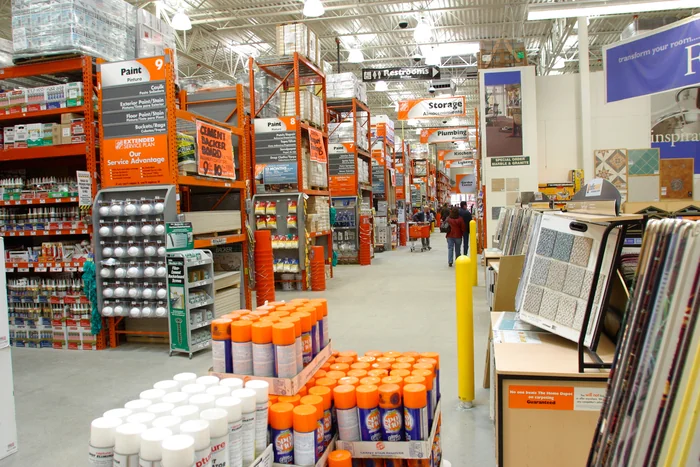
Building, construction, and home improvement giant Home Depot continues to see gains from ongoing investments in its supply chain systems.
The company has seen progressive gains in the speed of fulfilling online customer orders, with 55% of deliveries for in-stock SKUs now made either the same day or the next day. That's more than triple its 2022 amount.
Home Depot has added nearly 200 facilities over the past eight years to fill various roles in its supply chain, including 160 cross-dock facilities that enable the company to efficiently process bulky products like appliances. The company has also added twenty direct fulfillment centers close to customers that house popular SKUs and handle fulfillment, along with seventeen flatbed distribution centers that specialize in handling larger building materials.
Supply chain network design initiatives drive down costs. Home Depot uses proprietary artificial intelligence (AI) algorithms to analyze the company’s distribution locations and inventory levels and determine the most effective way to deliver products to customers. Shipping from the best possible location weighs several factors, including required delivery date, customer profile, geography, available assets and inventory positioning.
According to Jordan Broggi, EVP of Customer Experience and President of Online, “Our distribution assets, combined with inventory investments and technology enhancements have significantly increased the speed of our delivery.”
Video Spotlight:
- How Home Depot Is Using AI at Scale | $150M Retail AI Strategy (Jan 2, 2026, AIM Media House)
This post is based on the Supply Chain Dive article, How Home Depot sped up its supply chain — and what comes next, by Max Garland, December 18, 2025, and the YouTube video in the Spotlight. Image source: Capture +/Alamy Stock Photo
Discussion Questions:
1. The Supply Chain Operations Reference (SCOR) model offers organizations metrics to assess and improve their supply chain. Pillars of SCOR include planning, returns, delivery, and transformation. How does Home Depot's enhanced supply chain align with some of these pillars?
Guidance: Streamlined transportation to ensure shipping costs are minimized in meeting customer fulfillment aligns with the Deliver pillar. Investments in new supply chain tools and processes may require refreshed training and technology upgrades, aligning with the Plan pillar.
Focusing on quicker shipments may require adjustments to the operations team which actually configures customer shipments; Home Depot may need to address human vs capital-equipment levels (for safety and/or efficiency), especially as larger/bulkier items become a larger portion of shipping volumes.
2. What are 2-3 key benefits customers may experience which could drive higher loyalty levels?
Guidance: One benefit is more reliable shipping estimations. Large-scale building and construction crews typically base/position manpower (laborers) on the availability of supplies. Having more reliable shipping estimates—on everything from a truckload of framing 2x4s to a load of kitchen appliances—allows builders to manage labor more efficiently.
Another benefit is building responsive (pull-based) relationships with large-scale builders for unique items not typically stocked in the stores, which could lead to higher revenue and profitability growth.
A third benefit is that increased volumes of on-line orders could lead to leverage for negotiating with external transportation providers and fuel suppliers in reducing logistics costs.

