Limited Time Offers Popular with Restaurants
Restaurants use limited-time offers to create urgency, test products, attract attention, and connect promotions with holidays and events.
- Operations Management by Cachon & Terwiesch
- Demand Planning
- Forecasting
- Independent Demand Inventory
- Intro to Inventory Mgmt
- Inventory Management
- Operations and Supply Chain Management by Jacobs & Chase
- Operations and Supply Chain Management The Core by Jacobs & Chase
- Managing Inventories
- Operations Management in the Supply Chain by Schroeder & Goldstein
- Operations Management by Stevenson
- Managing Operations Across the Supply Chain by Swink, Melnyk, Hartley & Cooper
- Blog
- Article
- OM in the News
- Higher Education
Limited Time Offers (LTOs) have become commonplace in the restaurant industry.
Some of the recent LTOs include Jimmy John’s return of the Picklewich (a dill pickle replacing the bun), Long John Silver’s celebrating National Seafood Month (October 2025) with a variety of special offers, Culver’s Cheese and Mac, Potbelly’s French Toast Cookie, Chip City celebrating the fall season with its Crisp Apple Fritter Cookie, and Taco Cabana's returning brisket.
Events, such as National Sandwich Day (November 3, 2025), lead to discounted prices. For example, Capriotti’s, Dog Haus, Firehouse Subs, Jersey Mike’s Subs, Jimmy John’s, McAlister’s Deli, Panera, Penn Station East Coast Subs, Pizza Hut, Popeyes, Potbelly, and Schlotzsky’s all offered reduced prices or BOGO (Buy One Get One) deals.
Halloween also resulted in several LTOs, such as Burger King's returning Monster Menu (a Halloween-inspired menu with Jack-O-Lantern Whopper, Vampire Nuggets, Franken-Candy Sundae, and Mummy mozzarella Fries), Krispy Kreme's Halloween-themed box of four new donuts, and Chipotle's Chip-or-Treat, which unlocked a treat in its app.
Some LTOs return periodically. For example, McDonald’s sporadically returns the McRib sandwich and Shamrock Shake. Created in 1980, the McRib has turned into a cult following. There is even a website dedicated to tracking the McRib.
In 2022, McDonald’s sent the McRib on a Farewell Tour, only to reintroduce it every year following the tour. This year, rumors had it reappearing on November 11th, which turned out to be true.
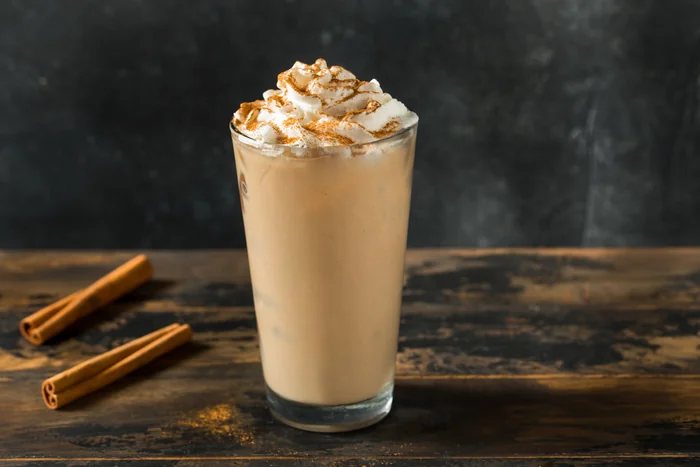
Another repeat LTO is the Pumpkin Spice Latte at Starbucks. Originally introduced in 2003, it has now become a fall tradition, encouraging other pumpkin LTOs at other restaurants.
LTOs are not limited to fast-food restaurants; many restaurants offer daily specials and seasonal items. For example, Chili’s offers a Margarita of the Month. For November 2025, it is The Witches Brew Marg and the Good Witch Marg.
Many fine dining restaurants offer LTOs.
Sometimes LTOs are offered based on the availability of ingredients. Others are offered to allow chefs to try new recipes.
Video Spotlight:
- Picklewich® is SO Back (Oct 22, 2025, Jimmy John's)
- BK Monster Menu | Vampires Have Feelings Too (Sept 30, 2025, BURGER KING)
This post is based on the Restaurant Business Online article, Pickles, Cookies and Beef Trend in New Limited-Time Offers, by Patricia Cobe, October 27, 2025; the Restobiz article, Spooktacular Halloween LTOs, October 7, 2025; and the YouTube videos in the Spotlight. Image source: Brent Hofacker/Shutterstock
Discussion Questions:
1. Why would a restaurant use an LTO?
Guidance: In most cases, LTO are used to drive traffic. They provide a good opportunity for the restaurant to promote the LTO. And in cases like Burger King’s Monster Menu, it creates an opportunity for customers to share experiences on social media.
It can also serve as a test bed for the product. Before a full-scale introduction, it allows the restaurant to determine the popularity of the item and possibly tweak the recipe.
Additionally, it provides the opportunity to test a restaurant's supply chain and processes related to new items.
Some LTOs can be used to promote products that are overstocked. This enables the firm to utilize items prior to their expiration, helping with inventory management.
2. What choices do restaurants have for an LTO?
Guidance: Obviously, restaurants have a choice of what product or products to offer. Additionally, the length of the offer can be one day, a month, or some other specified amount of time. LTOs can be tied to an event or holiday to gain synergies, planned as a recurring event, a one-time offering, or as a test to see if the LTO should become a regular menu item.
3. What operational issues do LTOs present?
Guidance: LTOs present several operational issues. As LTOs are generally used to increase traffic, it can be challenging to accurately forecast demand. The forecast is the driver of many other operational decisions.
Adding new items impacts inventory management. How many items should be in inventory?
The supply chain is impacted as the number of items to have in the supply chain, as well as replenishment timing, must be determined.
Further complications can arise when the LTO requires new ingredients. One or more new vendors may need to be found.
Processes for producing the food must be established, and workers must be trained.
The menu needs to be updated to reflect the new product. This has been made easier with digital menu boards.
Finally, project plans must be in place to ensure coordination between supply chain, marketing and other functional areas, to have a successful LTO.