Electronic shelf labels help grocers update prices faster, reduce labor, and improve inventory management, though surge-pricing concerns remain.
Tags
Operations Management by Cachon & Terwiesch
Competitiveness Strategy Productivity
Independent Demand Inventory
Intro to Inventory Mgmt
Inventory Management
Operations and Supply Chain Management by Jacobs & Chase
Operations and Supply Chain Management The Core by Jacobs & Chase
Managing Inventories
OPS and Supply Chain Strategy
Process Analysis
Operations Management in the Supply Chain by Schroeder & Goldstein
Operations Management by Stevenson
Strategy
Strategy and Sustainability
Managing Operations Across the Supply Chain by Swink, Melnyk, Hartley & Cooper
Blog
Article
OM in the News
Higher Education
Digital price tags in supermarkets help workers save time and help grocers better manage inventory by allowing prices to be changed with a quick click of a button.
About five to ten percent of U.S. grocery stores currently use digital tags, but increased use is expected soon. Still, the United States has a long way to go to catch up with European countries where up to 80 percent of grocery stores already have digital price tags.
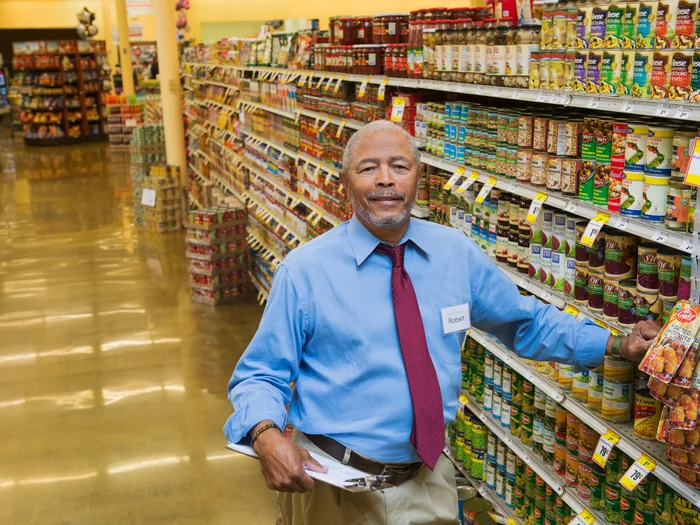
This post is based on the YouTube videos in the Spotlight. Image source: Blend Images/Alamy Stock Photo
Discussion Questions:
1. How can electronic shelf tags help increase efficiency in grocery stores?
Guidance: With paper tags on shelves, it can take up to two days for a big store like Walmart to update all its prices. On top of that, taking markdowns on meat or bakery items by applying stickers by hand adds even further to the labor requirements. If, however, a price can be changed in seconds on a digital tag, employees can spend time engaging in other tasks and productivity and/or customer service can be improved.
2. How can electronic shelf tags help improve inventory management?
Guidance: If a store finds that it has too much of a particular item on hand, particularly something that is about to expire, it can apply multiple discounts throughout the day until the item is cleared out of inventory. This not only helps the grocery store to try to recoup at least part of its investment in those items, it also can significantly reduce food waste, especially for highly perishable items.
3. What concerns do shoppers have about the tags, and have they proven to be true?
Guidance: Some consumers and news reporters worry that grocery stores will use tags to charge more for items during peak demand periods or if supplies appear to be running low.
However, a recent study did not bear this out. Though grocery stores were found to change prices, sometimes repeatedly during the day, they were prices shifting down rather than up. Sometimes this was to respond to prices of competitors. Other times it was to reduce the store's own stocks when they were too large or about to expire.
In fact, the ease with which prices can be reduced may actually encourage grocers to take markdowns more often. Rather than being shocked by a higher price at the checkout counter, a customer may actually end up getting an item for a lower price than was anticipated if the price dropped while he was completing his shopping.
As further evidence, surge pricing during the stores' normal operating hours have not been the norm in the many European stores that already use digital grocery pricing. When stores did increase the price of items, this was normally done at night when the store was closed, not during the day when it would upset customers or cause them to pay more than expected.
Author: Lisa M. Spencer
California State University, Fresno
Craig School of Business
Lecturer
Share:
Regional Page Available
It looks like you're outside the United States. Do you want to see your regional version of this page?
Education Topics
Education Topics/Courses
Education Topics/Courses/OM in the News
Education Topics/Courses/OM in the News/Title
Education Topics/Courses/OM in the News/Title/Operations and Supply Chain Management by Jacobs & Chase
Education Topics/Courses/OM in the News/Topic
Education Topics/Courses/OM in the News/Topic/Intro to Inventory Mgmt
Education Topics/Courses/OM in the News/Title/Operations and Supply Chain Management The Core by Jacobs & Chase
Education Topics/Courses/OM in the News/Title/Operations Management by Stevenson
Business Unit
Business Unit/Higher Education
Education Topics/Courses/OM in the News/Topic/Process Analysis
Asset Format Type
Asset Format Type/Blog
Education Topics/Courses/OM in the News/Topic/Managing Inventories
Education Topics/Courses/OM in the News/Topic/Independent Demand Inventory
Education Topics/Courses/OM in the News/Topic/OPS and Supply Chain Strategy
Education Topics/Courses/OM in the News/Topic/Strategy
Education Topics/Courses/OM in the News/Topic/Inventory Management
Education Topics/Courses/OM in the News/Topic/Competitiveness Strategy Productivity
Education Topics/Courses/OM in the News/Topic/Strategy and Sustainability
Education Topics/Courses/OM in the News/Title/Operations Management by Cachon & Terwiesch
Asset Format Type/Blog/Article
Education Topics/Courses/OM in the News/Title/Managing Operations Across the Supply Chain by Swink, Melnyk, Hartley & Cooper
Education Topics/Courses/OM in the News/Title/Operations Management in the Supply Chain by Schroeder & Goldstein
highered
2026-11-17T16:23:42.018Z
highered Digital Shelf Tags Improve Inventory Management Electronic shelf labels help grocers update prices faster, reduce labor, and improve inventory management, though surge-pricing concerns remain. Digital Shelf Tags Improve Inventory Management Electronic shelf labels help grocers update prices faster, reduce labor, and improve inventory management, though surge-pricing concerns remain. Tags Operations Management by Cachon & Terwiesch Competitiveness Strategy Productivity Independent Demand Inventory Intro to Inventory Mgmt Inventory Management Operations and Supply Chain Management by Jacobs & Chase Operations and Supply Chain Management The Core by Jacobs & Chase Managing Inventories OPS and Supply Chain Strategy Process Analysis Operations Management in the Supply Chain by Schroeder & Goldstein Operations Management by Stevenson Strategy Strategy and Sustainability Managing Operations Across the Supply Chain by Swink, Melnyk, Hartley & Cooper Blog Article OM in the News Higher Education More Article Type: Blog August 27, 2025 Share: Digital price tags in supermarkets help workers save time and help grocers better manage inventory by allowing prices to be changed with a quick click of a button. About five to ten percent of U.S. grocery stores currently use digital tags, but increased use is expected soon. Still, the United States has a long way to go to catch up with European countries where up to 80 percent of grocery stores already have digital price tags. Though some worry that electronic shelf tags may lead to surge pricing for consumers when demand is high and supplies are low, research doesn’t seem to support this fear in the grocery store environment. Video Spotlight: Stores could soon use digital price tags (July 31, 2025, FOX 5 New York) How electronic shelf labels are changing how grocery stores set prices (June 9, 2025, WCNC) Digital price tags popping up in more grocery stores (June 13, 2025, WUSA 9) This post is based on the YouTube videos in the Spotlight. Image source: Blend Images/Alamy Stock Photo Discussion Questions: 1. How can electronic shelf tags help increase efficiency in grocery stores? Guidance: With paper tags on shelves, it can take up to two days for a big store like Walmart to update all its prices. On top of that, taking markdowns on meat or bakery items by applying stickers by hand adds even further to the labor requirements. If, however, a price can be changed in seconds on a digital tag, employees can spend time engaging in other tasks and productivity and/or customer service can be improved. 2. How can electronic shelf tags help improve inventory management? Guidance: If a store finds that it has too much of a particular item on hand, particularly something that is about to expire, it can apply multiple discounts throughout the day until the item is cleared out of inventory. This not only helps the grocery store to try to recoup at least part of its investment in those items, it also can significantly reduce food waste, especially for highly perishable items. 3. What concerns do shoppers have about the tags, and have they proven to be true? Guidance: Some consumers and news reporters worry that grocery stores will use tags to charge more for items during peak demand periods or if supplies appear to be running low. However, a recent study did not bear this out. Though grocery stores were found to change prices, sometimes repeatedly during the day, they were prices shifting down rather than up. Sometimes this was to respond to prices of competitors. Other times it was to reduce the store's own stocks when they were too large or about to expire. In fact, the ease with which prices can be reduced may actually encourage grocers to take markdowns more often. Rather than being shocked by a higher price at the checkout counter, a customer may actually end up getting an item for a lower price than was anticipated if the price dropped while he was completing his shopping. As further evidence, surge pricing during the stores' normal operating hours have not been the norm in the many European stores that already use digital grocery pricing. When stores did increase the price of items, this was normally done at night when the store was closed, not during the day when it would upset customers or cause them to pay more than expected. About the Author Lisa M. Spencer California State University, Fresno Craig School of Business Lecturer Lisa M. Spencer California State University, Fresno Craig School of Business Lecturer
Electronic shelf labels help grocers update prices faster, reduce labor, and improve inventory management, though surge-pricing concerns remain.
Operations and Supply Chain Management by Jacobs & Chase, Intro to Inventory Mgmt, Operations and Supply Chain Management The Core by Jacobs & Chase, Operations Management by Stevenson, Higher Education, Process Analysis, Blog, Managing Inventories, Independent Demand Inventory, OPS and Supply Chain Strategy, OM in the News, Strategy, Inventory Management, Competitiveness Strategy Productivity, Strategy and Sustainability, Operations Management by Cachon & Terwiesch, Article, Managing Operations Across the Supply Chain by Swink, Melnyk, Hartley & Cooper, Operations Management in the Supply Chain by Schroeder & Goldstein