
Superwood: The Next Steel Competitor?
InventWood's Superwood offers a lighter, stronger alternative to steel with potential benefits for construction and sustainable material design.
- Operations Management by Cachon & Terwiesch
- Design of Products and Services
- Operations and Supply Chain Management by Jacobs & Chase
- Operations and Supply Chain Management The Core by Jacobs & Chase
- New Product Development
- Product and Svc Design
- Product Design
- Product Process Innovation
- Project Management
- Project Planning and Scheduling
- Projects
- Quality Mgmt and 6S
- Operations Management in the Supply Chain by Schroeder & Goldstein
- Operations Management by Stevenson
- Managing Operations Across the Supply Chain by Swink, Melnyk, Hartley & Cooper
- Blog
- Article
- OM in the News
- Higher Education
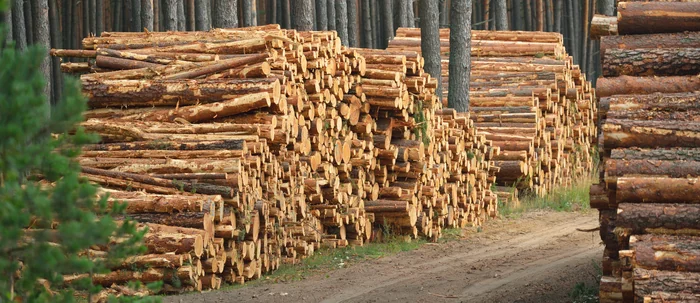
Superwood, a revolutionary new alternative to steel, is about to hit the market.
Made by InventWood, a company co-founded by a University of Maryland professor who published a 2018 study on how to transform wood chemically and physically, this product is lighter and stronger than steel and carries with it a host of potential benefits.
With manufacturing expected to ramp up in Summer 2025, builders can begin using Superwood in the very near future.
Video Spotlight:
- InventWood Introduction Video (May 13, 2024, InventWood)
- Superwood is Here! This Amazing New Material Could Change The World! (May 23, 2025, DIY with Dave)
- The TRUTH About SUPERWOOD - I Met With The CEO of InventWood and Have Answers to All Your Questions (June 27, 2025, DIY with Dave)
This post is based on the Jumpstart article, Wood Stronger Than Steel? Meet InventWood’s Carbon-Negative “Superwood”, by Nasir Ahmed, June 17, 2025; the Fast Company article, This ‘Superwood’ is stronger than steel. It’s coming to a building near you, by Jesus Diaz, May 16, 2025; and the YouTube videos in the Spotlight. Image source: Alex Stemmer/Shutterstock
Discussion Questions:
1. Where and how will Superwood be made? What amount and type of output is planned?
Guidance: Production of a million square feet of Superwood per year will begin in Summer 2025, in a 90,000 square foot facility in Frederick, Maryland.
Whereas producing a plank used to take weeks, it can now be done in a matter of hours. To begin with, the factory will focus on interior products such as cabinetry or panels for floors or walls, with production of exterior panels for roofing and siding beginning in the fall.
Eventually, the production of structural components like beams and columns is planned such that large multistory buildings could use the Superwood in place of steel.
Per InventWood, looking into the future, a facility with a capacity of more than 30 million square feet per year would mean that multiple, large-scale construction projects could be easily supported.
2. How is Superwood made, and what design features offer enhanced quality benefits over traditional wood or steel?
Guidance: Making Superwood is a two-stage process. The first step uses food-grade chemicals to soften the wood fibers enough so they can collapse and be compressed. The second step heats the wood and compresses it to about one-fifth of its original thickness as chemical bonds are formed to strengthen the wood.
Superwood combines the beauty of rich wood grains with the strength and performance of steel. Superwood is said to be 12 times stronger than traditional lumber. It is resistant to fire and boasts a Class A rating, thus equivalent to brick, concrete, and stone. It also staves off warping, swelling, rot and corrosion. In comparison to steel, its mechanical properties win out. Superwood is only a sixth of the weight of mild structural steel with about 50 percent more tensile strength.
Though the primary end use currently is for building materials, Superwood’s creators envision future applications in furniture or using it to replace carbon fiber in aircraft or cars.
3. What are some of the sustainability and project management benefits related to Superwood?
Guidance: Production of Superwood generates significantly lower levels of carbon dioxide than the production of steel, and Superwood stores carbon rather than releasing it. It is also biodegradable when it reaches the end of its life cycle. Its structure lessens the need for other building materials such as fire retardants.
Because it is lighter than steel, using Superwood promises additional benefits, such as reducing the size of foundations and using lighter cranes. Shipping costs should also be impacted. Eventually overall project costs could potentially come down as the price of the product itself decreases with time.

