Electric Vehicle Fires on Cargo Ships
Electric vehicle battery fires create severe risks on cargo ships, where heat, limited access, and reignition make suppression difficult.
- Operations Management by Cachon & Terwiesch
- Global Logistics
- Independent Demand Inventory
- Intro to Inventory Mgmt
- Inventory Management
- Operations and Supply Chain Management by Jacobs & Chase
- Operations and Supply Chain Management The Core by Jacobs & Chase
- Location Logistics and Distribution
- Logistics Mgmt
- Logistics Distribution Transportation
- Managing Inventories
- Operations Management in the Supply Chain by Schroeder & Goldstein
- Operations Management by Stevenson
- Supply Chain Management
- Managing Operations Across the Supply Chain by Swink, Melnyk, Hartley & Cooper
- Blog
- Article
- OM in the News
- Higher Education
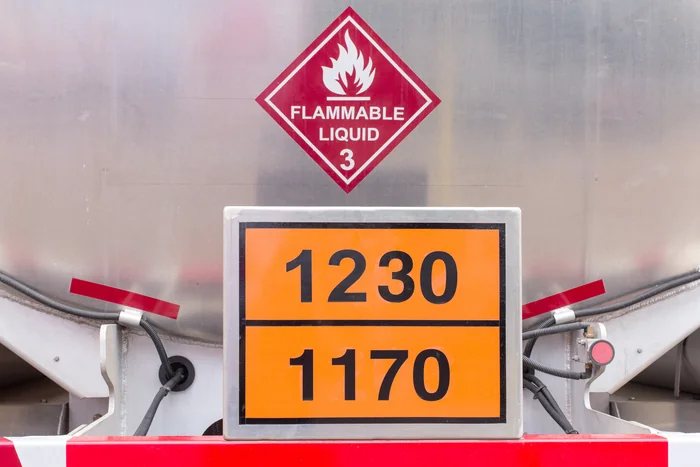
Fires from electric vehicles (EVs) continue to be a problem on cargo ships.
On June 4, 2025, the Morning Midas, a Pure Car and Truck Carrier (PCTC) ship that carried around 3,000 cars, including 800 electric and hybrid vehicles, caught fire. Smoke was seen coming from the deck that contained the EVs. The crew attempted to extinguish the fire, but failed, and then abandoned the ship.
Salvage crews arrived within days, and waited for the fires to burn out. The ship sank on June 23rd, after fire had burned through the majority of the vessel.
Another cargo ship, the Felicity Ace, carrying approximately 4,000 automobiles, including EVs, sank in 2022. The intensity of the fire was impacted by the EVs onboard.
Transporting automobiles presents several hazards, and several cargo ships carrying automobiles have caught fire. The addition of EVs with their lithium-ion batteries has exacerbated the issue of fires aboard ship, adding such issues as thermal runaway (which makes it difficult to extinguish the fire), toxic fumes, and reignition.
Video Spotlight:
- Cargo ship carrying electric vehicles catches fire, crew abandons ship (June 5, 2025, USA TODAY)
- Surge in fire incidents at sea sparks electric vehicle cargo conversation (June 7, 2025, 9 News Australia)
This post is based on the USA Today article, Morning Midas, Ship Carrying 3,000 Cars, Abandoned After Fire on Electric Vehicle Deck, by James Powel, June 4, 2025; the Insurance Business Mag article, Why Fires on Container Ships Are Still A Major Issue, by Daniel Wood, February 6, 2025; the CNN article, Cargo ship carrying new vehicles to Mexico sinks in the North Pacific weeks after catching fire, by Associated Press, June 24, 2025; and the YouTube videos in the Spotlight. Image source: gumpapa/123RF
Discussion Questions:
1. What are the impacts of cargo ship fires on the automotive supply chain?
Guidance: The first impact is the value of the cargo, and the cargo ship itself. For example, the Felicity Ace was carrying luxury cars, and its loss was valued at $400 million.
Additionally, the loss of a cargo ship has a sizable impact on logistics and inventory management. Thousands of vehicles are transported on each ship, and customers eagerly await their arrival. The vehicles need to be replaced, which will take time.
For small losses in the supply chain, safety stock can be used. However, the large number of cars lost on an irregular basis is difficult to replace, and safety stock is ineffective.
Could an agile supply chain approach be used? It would mean planning how to quickly ramp up production to replace the cars, which is a challenge given the travel distance and the time required for production.
2. Why are electric vehicle (EV) fires so damaging to cargo ships?
Guidance: EV fires are difficult to extinguish. One common tactic to combat any EV fire is to cool it with water to prevent it from spreading. Essentially, they leave the fire to burn out on its own.
However, this process is challenging onboard cargo ships. In the case of the Morning Midas, the crew was evacuated, and the ship was left adrift with the fire burning. The ship is generally left burning until the fire burns itself out. It is not uncommon for the ship to eventually sink.
Compounding the problem are the toxic fumes and the likelihood of reignition from EV fires.
3. What can be done to prevent the loss of EVs from fires on cargo ships?
Guidance: EVs currently pose a risk to cargo ships. As experience is gained with EV fires, more effective methods and procedures will be developed to extinguish them.
Early identification of onboard EV fires makes them easier to contain. Many devices are being installed on ships to facilitate early detection, including sensors to monitor temperature and motion. Many cargo containers are equipped with RFID devices for location tracking. Additional temperature sensors can be connected to the RFID device for early detection of fires.
EVs could be redesigned to utilize either different batteries or those less likely to catch fire or result in thermal runaway.
Another approach is to avoid shipping of EVs by moving production closer to the consumer. Tariffs are the most recent of several reasons prompting companies to consider nearshoring production.
While shipping of any vehicle is dangerous, used cars present additional risks. As more electric vehicles enter the market, the reseller market will grow, increasing the risk that cargo ships may transport these used vehicles. Extra safety precautions will need to be taken.