
Quality Control and Shortages in Egg Production
Egg producers use multiple quality checkpoints to grade products by size and condition before directing them to retail or other uses.
- Operations Management by Cachon & Terwiesch
- Operations and Supply Chain Management by Jacobs & Chase
- Operations and Supply Chain Management The Core by Jacobs & Chase
- Management of Quality
- Managing Processes and Capacity
- Managing Quality
- Quality and SPC
- Quality Control
- Quality Control and Improvement
- Quality Mgmt and 6S
- Operations Management in the Supply Chain by Schroeder & Goldstein
- Six Sigma Quality
- Statistical Quality Control
- Operations Management by Stevenson
- Strategic Capacity Management
- Managing Operations Across the Supply Chain by Swink, Melnyk, Hartley & Cooper
- Blog
- Article
- OM in the News
- Higher Education
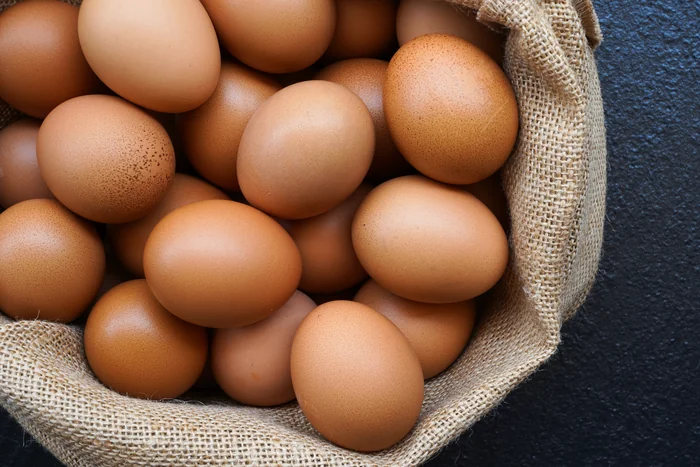
Chicken eggs undergo a rigorous screening process prior to being sent to market.
Many quality checkpoints are used to make sure eggs sent to supermarkets are of consistent size and quality. Eggs which do not “make the grade” for retail consumers are put to other uses.
Video Spotlight:
- EGGS | How It's Made (June 5, 2018, Discovery UK)
- HOW 100 BILLION 🥚 EGGS Are Produced Annually in the United States (Aug 21, 2024, Worldnite Journey)
This post is based on the YouTube videos in the Spotlight. Image source: NP27/Shutterstock
Discussion Questions:
1. How does the hatchery environment influence egg-laying capacity and quality?
Guidance: Prior to any eggs being laid, factors that will influence the quality of the eggs are tightly monitored and controlled, including ventilation, temperature and humidity. In addition, to facilitate maximum egg-laying capacity, 15 hours of fluorescent lighting are provided daily.
Carefully formulated feed is provided three times a day to maximize egg quality. The correct mix of nutrients even helps make the eggshells stronger.
Given this ideal environment, the typical hen has an laying capacity of about 300 eggs per year.
2. At what points in the process is quality monitored? What kinds of quality checks are utilized?
Guidance: Many types of inspections are performed during the production process. Some are visual and some are automated using high tech equipment.
Once eggs are laid, badly soiled ones are identified by a visual inspection and removed from the line by hand to receive a special cleaning. Eggs then go to a grading station to be graded by quality and designated for consumer use, other commercial food or pharmaceutical use, or various products like shampoos.
After the eggs are sorted by grade, washed, and dried, they pass over a bright light that helps the inspector to see if the shells are intact. If a worker sees a cracked egg, he uses a large scoop to gently remove the egg from the line. Next, an overhead camera inspects the exterior of each shell for condition and quality. Other cameras check the interior to make sure there is no blood inside the eggs. Eggs are lightly tapped by acoustic sensors. The various sounds help the system to detect and mark any whose shells are brittle and likely to break.
These steps help ensure the quality of the eggs being sold. Eggs that make it this far are then weighed to classify as “small,” “medium,” “large,” or “extra large,” which helps ensure consistency in egg size for the consumer.
To improve traceability and minimize problems if quality issues are detected once the eggs are packaged and sold, each is stamped with an identifying mark. To ensure safety of consumption, cartons are stamped with a “best before” date.
While caged birds were portrayed in the videos, the Discovery UK video also suggested that buying cage free and/or organic eggs can further enhance the quality of life of the chickens and make for potentially better quality for the consumer, although no explanation of why it is better for humans was provided.
3. Is the color of the eggs any indication of quality?
Guidance: Egg color varies based on the breed of hen that lays them, but all eggs are the same inside. However, for commercial purposes, suppliers give consumers a visually consistent carton of eggs that are all the same color.
4. In light of the egg shortage experienced in early 2025, what are the implications, given the length of time needed to get new egg-laying hens?
Guidance: Hens do not require a mate to lay eggs that can be sold to consumers. A mate is only needed to fertilize eggs that need to hatch.
Given the current shortage of hens from the culling of millions of birds due to avian flu, it will take considerable time and effort to replenish the nation’s egg-laying hen supply. Some eggs will need to be diverted for that purpose, further reducing the egg supply for human consumption. Eggs then need time to hatch, and chicks must grow until they are at least 19 weeks old, at which point they can begin laying their own eggs.
Replenishing the millions of lost birds will take time, and shortages of eggs will continue until then.

