
Starbucks Brews Changes for Ordering App and Menu
Starbucks is simplifying its menu and improving mobile ordering while working to restore the welcoming community coffeehouse experience.
- Operations Management by Cachon & Terwiesch
- Capacity Planning
- Competitiveness Strategy Productivity
- Operations and Supply Chain Management by Jacobs & Chase
- Operations and Supply Chain Management The Core by Jacobs & Chase
- Managing Processes and Capacity
- OPS and Supply Chain Strategy
- Quality and SPC
- Operations Management in the Supply Chain by Schroeder & Goldstein
- Operations Management by Stevenson
- Strategic Capacity Management
- Strategic Capacity Planning
- Strategy
- Strategy and Sustainability
- Svc Systems with Impatient Customers
- Managing Operations Across the Supply Chain by Swink, Melnyk, Hartley & Cooper
- Blog
- Article
- OM in the News
- Higher Education
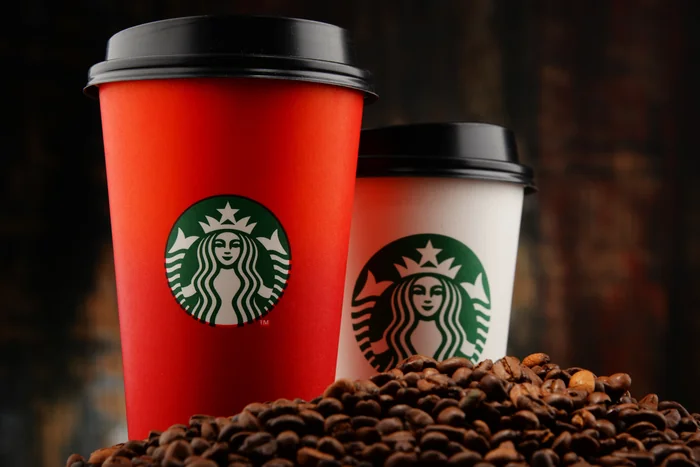
Changes are brewing at Starbucks.
CEO Brian Niccol plans for more efficient mobile ordering, plus subtle changes to bring back the “community coffee house” feel. Menu cuts are slated as well.
Video Spotlight:
- New Starbucks CEO speaks out on coffee prices and upcoming changes (Dec 5, 2024, ABC News)
This post is based on the Economic Times article, Starbucks' CEO wants to change how you pick up your morning coffee, by Anonymous, February 20, 2025; the Chain Storage article, Starbucks rolling out changes, including cutting 30% of menu; sales, visits fall, by Marianne Wilson, January 29, 2025; and the YouTube video in the Spotlight. Image source: monticello/123RF
Discussion Questions:
1. What dimensions of the external environment have played a part in the creation of the new “Back to Starbucks” strategy?
Guidance: To set the chain apart from competitors, CEO Brian Niccol has created a “Back to Starbucks” strategy. One key component is improved customer service. He plans to bring back the community coffeehouse feel that was a part of Starbucks' roots when it first started 53 years ago.
To foster this vibe, the self-service coffee condiment bar has returned along with ceramic mugs and handwritten notes on cups. This may reflect a response to a post-pandemic shift in the socio-cultural environment. During the pandemic, many businesses accelerated their implementation of mobile ordering platforms that were already in the works. Advances in the technological environment were making this possible at a time when the sociocultural environment put a premium on contactless ordering. Now, however, Starbucks needs to reassert itself and find ways to increase its somewhat sluggish sales. It believes customers want Starbucks to be that “third place” between work and home that it used to be, and it is attempting to respond by focusing on enhancing customer experience through superior service.
Starbucks also recognizes that customers are feeling the pinch of prolonged inflation, part of the economic environment. It plans no price increases for the remainder of this fiscal year ending in June 2025.
To further help in-store customers, Starbucks now offers free refills on its hot and ice-brewed coffee and tea, which may encourage more in-store sales as customers use the venue to work or meet up with friends. It is also ditching the upcharge for plant-based milks.
2. How are Starbucks’ planned menu cuts related to its strategy and capacity planning?
Guidance: Two key strategies at Starbucks are responsiveness/short processing time and differentiation via customization. In terms of capacity planning, these two strategies are at odds with each other.
Usually, increasing speed of service involves having a smaller, simpler menu, perhaps with the option to prepare some things ahead of the customer's order. For Starbucks, preparing drinks ahead is difficult, since most are customized during the ordering process.
Niccol does say that Starbucks will cut marginally profitable items or items that are only sold a couple of times a day. The specific menu offerings have not yet been identified, but 30 percent of the current options will be cut by June 2025.
To the extent that this increases speed of service, it increases capacity as measured by the number of orders Starbucks can fill per hour.
3. What changes in mobile ordering are being made to reduce wait times and enhance the customer experience?
Guidance: Because of the issues mentioned in question two, finding ways to further improve customer experience is imperative. Many customers have complained about how long it takes to get their mobile orders and chaos in the pickup area. Some were confused about which drink was theirs. Meanwhile, baristas were often overwhelmed with trying to fill large numbers of mobile orders, to the point that they could not interact with customers in an attentive way.
Niccol wants to improve the mobile app so that it does a better job of telling customers exactly when their orders will be ready. This could potentially reduce wait times and reduce the number of people in the pickup area prior to their drinks being ready.
Currently, the app gives an estimate of how many minutes it will take before the order is ready. In the future, Niccol hopes that improved technology will result in actual pickup times being displayed when the customer places an order, and that these pickup times will better match when the customer plans to arrive. In particular, customers want the option to choose a pickup time that aligns with how long it will take them to arrive at the Starbucks location.
The app will ideally also have greater transparency, so that it shows how much add-ons will increase the price as customers build their beverages, rather than only showing the total once the drink choices are complete.

