Quality Issues with the Summer 2024 Paris Olympic Medals
Athletes are returning tarnished medals from the Paris Olympics, raising questions about material quality, manufacturing, and accountability.
- Operations Management by Cachon & Terwiesch
- Operations and Supply Chain Management by Jacobs & Chase
- Operations and Supply Chain Management The Core by Jacobs & Chase
- Management of Quality
- Managing Quality
- Process Improvement
- Quality and SPC
- Quality Control
- Quality Control and Improvement
- Quality Mgmt and 6S
- Operations Management in the Supply Chain by Schroeder & Goldstein
- Six Sigma Quality
- Statistical Quality Control
- Operations Management by Stevenson
- Managing Operations Across the Supply Chain by Swink, Melnyk, Hartley & Cooper
- Blog
- Article
- OM in the News
- Higher Education
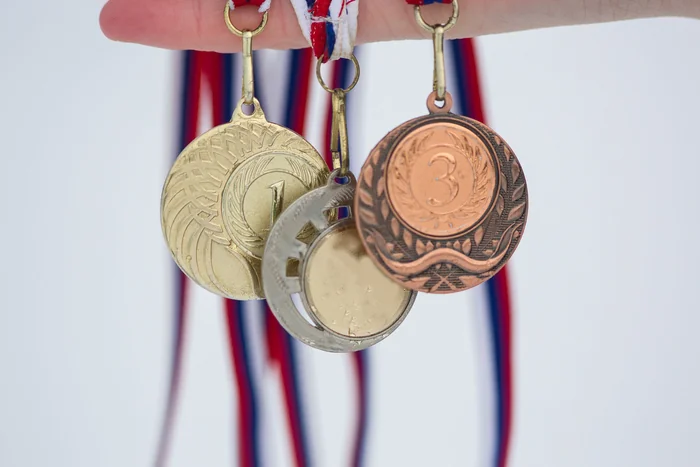
Medals from the Summer 2024 Paris Olympics are being returned by athletes due to quality defects.
The renowned French luxury jeweler, Chaumet, which designed the medals, denied responsibility, pointing to the National Mint of France and its manufacturing process as the cause of the early tarnishing.
Video Spotlight:
- Olympians say gold, silver, bronze medals from Paris are rusting (Jan 22, 2025, TODAY)
This post is based on the NY Post article, French luxury giant LVMH denies responsibility for rusty, deteriorating Olympic medals, by Ariel Zilber, January 21, 2025; the USA Today article, Damaged medals from 2024 Paris Olympics will be replaced after complaints of deterioration, by Jordan Mendoza, January 14, 2025; and the YouTube video in the Spotlight. Image source: Dominik Belica/Shutterstock
Discussion Questions:
1. What kinds of quality problems have arisen for the Paris medals? Has this issue ever happened before?
Guidance: Over 100 Paris gold, silver, and bronze medals have been returned for replacement because the outer surface of precious metal is peeling off. One athlete said the deteriorating finish looked like “crocodile skin”. The bronze medals seem to have the worst problems, perhaps because this alloy can react with moisture and sweat more easily than silver or gold.
A quality problem from the 2016 Rio Olympics resulted in replacing about 6,000 medals, due to rust, flaking, and spotting. Issues related to high heat and problems in the manufacturing process were the root cause.
2. To what are the 2024 medals' quality problems attributed?
Guidance: To try to be more sustainable, designers created the medals with recycled materials in mind. Some observers speculate that these materials may have had some impurities, which are starting to react in unexpected ways.
However, it has definitely been acknowledged that flawed varnish at the French mint seems to be a key culprit. New regulations from the European Union forbade the use of the chromium trioxide that was typically used to keep the metals from rusting. The mint had to change the varnishing process in response. It will be replacing the faulty medals with new ones in the coming months.
3. How do the quality problems in the Rio 2016 and the Paris 2024 Olympics relate to quality of design or quality of conformance?
Guidance: The Paris problem was related to the materials and/or finishing substances (the varnish) that were part of the design of the product itself. Thus, opting to use the varnish which no longer contained the rust-preventing chromium trioxide, rather than finding a more durable alternative, is an issue of quality of design. The issue did not come from luxury jeweler Chaumet, which created the artwork for the medal, but it was a part of the medal design that was determined by the French mint.
The Rio problems were related to the manufacturing process, and thus were issues of quality of conformance. Variations in heat, handling conditions, and other problems that took place while the medals were being made caused them to experience rust, flaking, and spotting.
4. How do the problems with the Paris medals relate to internal versus external costs of quality?
Guidance: The most costly time to catch a quality problem is once it has reached the consumer or end user. At that point, not only has the company paid to make the product and ship it to the consumer, but it also will have to deal with return or recall costs. In more serious cases, liability costs may arise as well.
In this case, the mint not only has to remake about 100 medals, using new inputs like labor and materials, but it also has to deal with more shipping costs as well as negative public perceptions for it as well as jeweler Chaumet.
It would have been far less costly and damaging to the image of the Olympics, Chaumet, and the mint if the problems with the varnish had either been prevented in the first place with more rigorous quality testing in the design process, or if the problem would have come to light via more testing after the medals were made and before being distributed to the athletes.