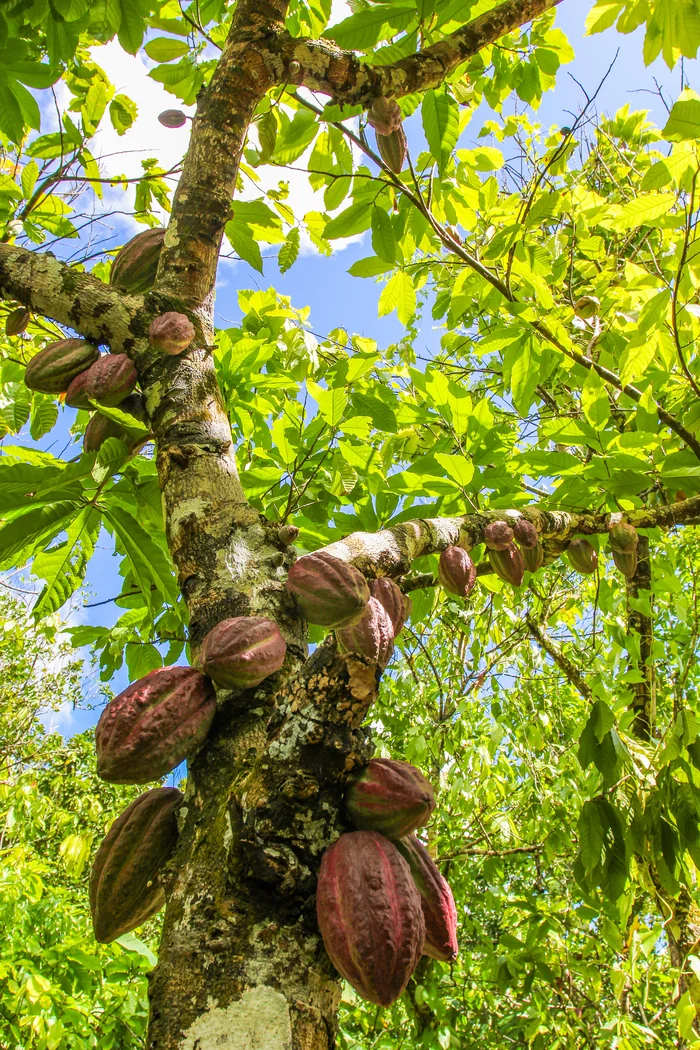
Hershey’s Cocoa for Good program supports farmer incomes and environmental goals while increasing cocoa yields and strengthening supply.
Tags
Operations Management by Cachon & Terwiesch
Global Logistics
Global Sourcing & Procurement
Independent Demand Inventory
Intro to Inventory Mgmt
Inventory Management
Operations and Supply Chain Management by Jacobs & Chase
Operations and Supply Chain Management The Core by Jacobs & Chase
Operations Management in the Supply Chain by Schroeder & Goldstein
Sourcing and Supply Management
Operations Management by Stevenson
Strategy and Sustainability
Supply Chain Management
Sustainable OM
Managing Operations Across the Supply Chain by Swink, Melnyk, Hartley & Cooper
Blog
Article
OM in the News
Higher Education
Confectionary giant Hershey continues to focus on the Triple Bottom Line—people, profits, and planet—through its Cocoa for Good program, which seeks to boost cocoa grower incomes, prioritize the well-being of farming families, and protect the environment in cocoa growing regions.
The Cocoa for Good program also increases the supply of the company’s main raw material, which reduces sourcing costs.
This program is targeted toward vulnerable ecosystems in West Africa’s Ivory Coast, the crop’s main growing region, and includes initiatives around eliminating child labor, instituting a zero-deforestation policy, and improving farmer incomes. While Cocoa for Good has heavy environmental, social and governance (ESG) elements, the initiative also helps increase the supply of cocoa, which has hampered the company’s supply chain operations, with cocoa costs more than doubling over the last year. Those cost increases have led to price increases to customers.
Cocoa for Good—a $500 million multi-year commitment—provides training for farmers throughout the region with a goal of improving cocoa yield and output, while simultaneously reducing deforestation, leading to an overall more sustainable operating environment.
This post is based on the Supply Chain Dive article, Hershey invests $500M to improve cocoa farming struggles, by Elizabeth Flood, November 7, 2024, and the YouTube video in the Spotlight. Image source: Maria Nelasova/Shutterstock
Discussion Questions:
1. As cocoa production increases in West Africa’s Ivory Coast, what other implications/concerns could there be across other supply chain pillars?
Guidance: Hershey may need to invest in additional packaging to support the movement of larger amounts of cocoa. This could mean considering initiatives around returnable/reusable packaging to further aid sustainability initiatives.
Hershey may need to secure additional transportation capacity—such as ocean containers—to physically transport larger volumes of the raw material to production facilities around the world.
Hershey may need to invest in additional quality infrastructure (ex. training, processes, tools, equipment, and staff) to ensure the efforts to increase yield still meet the company’s stringent raw material quality requirements.
2. What are some key take-aways from Hershey’s Cocoa for Good program from an ESG perspective?
Guidance: ESG initiatives do not have to be a ‘net cost adder’, as increasing the supply of cocoa (profit) while reducing deforestation (planet) and improving farmer incomes/reducing child labor (people) are mutually achievable.
Hershey’s Cocoa for Good program highlights the importance of end-to-end supply chain planning and strategic long-term partnerships with key suppliers.
ESG initiatives typically have more strategic longer-term horizons to fully implement. Initiatives around deforestation, reducing child labor, and improving farming yields/output, require time, capital, and commitment to bring to fruition.
Author: James Kirby Easterling, DBA
Eastern Kentucky University
Program Director, Global Supply Chain Management
Associate Professor and Executive-in-Residence
Share:
Regional Page Available
It looks like you're outside the United States. Do you want to see your regional version of this page?
Education Topics
Education Topics/Courses
Education Topics/Courses/OM in the News
Education Topics/Courses/OM in the News/Title
Education Topics/Courses/OM in the News/Title/Operations and Supply Chain Management by Jacobs & Chase
Education Topics/Courses/OM in the News/Topic
Education Topics/Courses/OM in the News/Topic/Intro to Inventory Mgmt
Education Topics/Courses/OM in the News/Title/Operations and Supply Chain Management The Core by Jacobs & Chase
Education Topics/Courses/OM in the News/Topic/Global Sourcing & Procurement
Education Topics/Courses/OM in the News/Title/Operations Management by Stevenson
Business Unit
Business Unit/Higher Education
Asset Format Type
Asset Format Type/Blog
Education Topics/Courses/OM in the News/Topic/Independent Demand Inventory
Education Topics/Courses/OM in the News/Topic/Sustainable OM
Education Topics/Courses/OM in the News/Topic/Inventory Management
Education Topics/Courses/OM in the News/Topic/Strategy and Sustainability
Education Topics/Courses/OM in the News/Topic/Sourcing and Supply Management
Education Topics/Courses/OM in the News/Title/Operations Management by Cachon & Terwiesch
Education Topics/Courses/OM in the News/Topic/Global Logistics
Asset Format Type/Blog/Article
Education Topics/Courses/OM in the News/Title/Managing Operations Across the Supply Chain by Swink, Melnyk, Hartley & Cooper
Education Topics/Courses/OM in the News/Title/Operations Management in the Supply Chain by Schroeder & Goldstein
Education Topics/Courses/OM in the News/Topic/Supply Chain Management
highered
2026-11-06T16:49:11.124Z
highered Hershey's ESG Focus Also Increases Cocoa Supply Hershey’s Cocoa for Good program supports farmer incomes and environmental goals while increasing cocoa yields and strengthening supply. Confectionary giant Hershey continues to focus on the Triple Bottom Line—people, profits, and planet—through its Cocoa for Good program, which seeks to boost cocoa grower incomes, prioritize the well-being of farming families, and protect the environment in cocoa growing regions. The Cocoa for Good program also increases the supply of the company’s main raw material, which reduces sourcing costs. This program is targeted toward vulnerable ecosystems in West Africa’s Ivory Coast, the crop’s main growing region, and includes initiatives around eliminating child labor, instituting a zero-deforestation policy, and improving farmer incomes. While Cocoa for Good has heavy environmental, social and governance (ESG) elements, the initiative also helps increase the supply of cocoa, which has hampered the company’s supply chain operations, with cocoa costs more than doubling over the last year. Those cost increases have led to price increases to customers. Cocoa for Good—a $500 million multi-year commitment—provides training for farmers throughout the region with a goal of improving cocoa yield and output, while simultaneously reducing deforestation, leading to an overall more sustainable operating environment. Video Spotlight: $500M Cocoa For Good Investment Helps Farmers & Families (Oct 26, 2018, The Hershey Company) This post is based on the Supply Chain Dive article, Hershey invests $500M to improve cocoa farming struggles, by Elizabeth Flood, November 7, 2024, and the YouTube video in the Spotlight. Image source: Maria Nelasova/Shutterstock Discussion Questions: 1. As cocoa production increases in West Africa’s Ivory Coast, what other implications/concerns could there be across other supply chain pillars? Guidance: Hershey may need to invest in additional packaging to support the movement of larger amounts of cocoa. This could mean considering initiatives around returnable/reusable packaging to further aid sustainability initiatives. Hershey may need to secure additional transportation capacity—such as ocean containers—to physically transport larger volumes of the raw material to production facilities around the world. Hershey may need to invest in additional quality infrastructure (ex. training, processes, tools, equipment, and staff) to ensure the efforts to increase yield still meet the company’s stringent raw material quality requirements. 2. What are some key take-aways from Hershey’s Cocoa for Good program from an ESG perspective? Guidance: ESG initiatives do not have to be a ‘net cost adder’, as increasing the supply of cocoa (profit) while reducing deforestation (planet) and improving farmer incomes/reducing child labor (people) are mutually achievable. Hershey’s Cocoa for Good program highlights the importance of end-to-end supply chain planning and strategic long-term partnerships with key suppliers. ESG initiatives typically have more strategic longer-term horizons to fully implement. Initiatives around deforestation, reducing child labor, and improving farming yields/output, require time, capital, and commitment to bring to fruition. James Kirby Easterling, DBA Eastern Kentucky University Program Director, Global Supply Chain Management Associate Professor and Executive-in-Residence
Hershey’s Cocoa for Good program supports farmer incomes and environmental goals while increasing cocoa yields and strengthening supply.
Operations and Supply Chain Management by Jacobs & Chase, Intro to Inventory Mgmt, Operations and Supply Chain Management The Core by Jacobs & Chase, Global Sourcing & Procurement, Operations Management by Stevenson, Higher Education, Blog, Independent Demand Inventory, OM in the News, Sustainable OM, Inventory Management, Strategy and Sustainability, Sourcing and Supply Management, Operations Management by Cachon & Terwiesch, Global Logistics, Article, Managing Operations Across the Supply Chain by Swink, Melnyk, Hartley & Cooper, Operations Management in the Supply Chain by Schroeder & Goldstein, Supply Chain Management