
Port of Baltimore Rebound: Investments in New Capacity
The Port of Baltimore is investing in rail capacity and commercial development to regain cargo and cruise business after the Key Bridge collapse.
- Operations Management by Cachon & Terwiesch
- Capacity Planning
- Operations and Supply Chain Management by Jacobs & Chase
- Operations and Supply Chain Management The Core by Jacobs & Chase
- Location Logistics and Distribution
- Logistics Mgmt
- Logistics Distribution Transportation
- Managing Processes and Capacity
- OPS and Supply Chain Management
- Scheduling
- Scheduling Operations
- Scheduling to Prioritize Demand
- Operations Management in the Supply Chain by Schroeder & Goldstein
- Operations Management by Stevenson
- Supply Chain Management
- Managing Operations Across the Supply Chain by Swink, Melnyk, Hartley & Cooper
- Workcenter Scheduling
- Blog
- Article
- OM in the News
- Higher Education
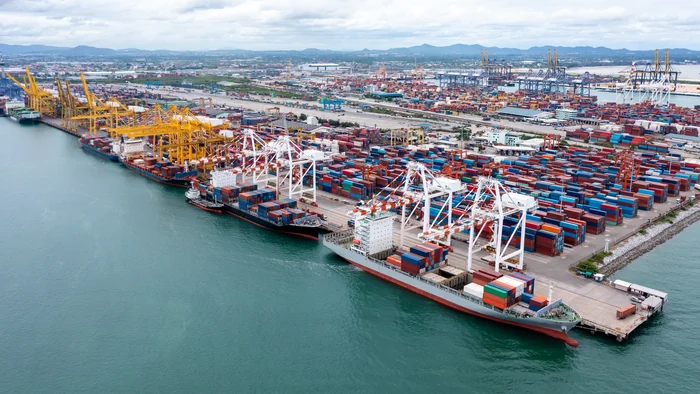
The Port of Baltimore is striving to rebound following the incident on March 26, 2024. A loaded containership collided with the Francis Scott Key Bridge, leading to a major supply chain disruption across multiple industries.
The Maryland Port Administration has hired Matt Wypyski, a 33-year maritime executive, to lead the commercial development efforts to gain back prior business that was lost following the accident, and to grow new business. The Port of Baltimore is beefing up capacity to handle double-stacked trains, and focusing on regaining business in the cruise ship industry.
The Port of Baltimore is a major economic driver in the region, with more than 8,000 skilled workers. It represents 13% of Maryland’s gross domestic product. It has long been a major port serving the automobile industry, and particularly roll-on/roll-off (“RORO”) containerships for automobiles exported from the US and imported from other countries. Prior to the accident, the Port of Baltimore also ranked number one amongst all US ports in handling farm and construction equipment and vehicles.
While there’s much excitement on the future potential of the Port of Baltimore, various activities could hamper its growth over the next few months.
The International Longshoremen’s Association (labor union of dockworkers) agreed to an extension on its contract, set to expire in January 2025. If no agreement is reached, a strike could lead to a much longer shutdown than the 3-day event in early October 2024. These work slowdowns/stoppages lead to major congestion in the ports as containerships cannot be easily sequenced for unloading.
Additionally, two major hurricanes—Hurricane Helen and Hurricane Milton—recently ravaged large parts of the southeastern United States. They impacted many east coast ports, and have led to more shipping companies routing containerships to west coast ports. If rerouting continues, it could lead to a reduction in volume for the Port of Baltimore.
Video Spotlight:
- Shipping lines returning to Port of Baltimore (Sept 5, 2024, WMAR-2 News)
- Port strike ends after dock workers reach contract agreement (Oct 4, 2024, TODAY)
This post is based on the Supply Chain Dive articles, Port of Baltimore creates deputy role to win back shipping business, by Colin Campbell, September 4, 2024, The ILA strike is over. What should shippers prioritize now?, by Alejandra Carranza, October 11, 2024, and Hurricane Milton’s supply chain impact: What to know, by Philip Neuffer, October 9, 2024; the Governor of Maryland press release, Governor Moore Announces the Full Reopening of the Port of Baltimore, June 12, 2024; and the YouTube videos in the Spotlight. Image source: MISTER DIN/Shutterstock
Discussion Questions:
1. What are some lessons learned that companies could apply to mitigate supply chain disruptions?
Guidance: Companies should place heavy emphasis on a multi-faceted supply chain strategy in which raw materials and/or finished goods are regularly shipped in and out of multiple ports, as opposed to sole reliance on only one port.
Companies should consider recruiting supply chain talent specifically trained in resiliency planning. Supply Chain is a dynamic field, and talent/labor skilled in resiliency planning should be a high priority given the complexities of international trade.
Companies should evaluate their supply chain network design (SCND) from an inventory management perspective to consider warehousing strategies near customers to lessen the immediate short-term risk with port operations.
2. What are some ways the Port of Baltimore can promote its reopening to regain prior business and solicit new business?
Guidance: One way to promote its reopening is to emphasize the new capability gained with double-stack trains which ‘feed’ the containerships (enhanced multimodal capacity).
The Port of Baltimore could consider short-term incentives for containership and rail companies, with discounts/rebates that could possibly be passed on to actual manufacturers. That could lead to more volume being redirected back to the Port of Baltimore.
A third way is to heavily promote the reopening of the port to the travel/entertainment industry. For example, partner with major travel agencies with new cruise offers in and out of the Port of Baltimore.

