
Causes of Japan's Rice Shortage
Japan’s rice shortage reflects three years of demand outpacing production, leaving stocks at a 20-year low and stores limiting purchases.
- APP and MPS
- Operations Management by Cachon & Terwiesch
- Capacity Planning
- Intro to Inventory Mgmt
- Operations and Supply Chain Management by Jacobs & Chase
- Operations and Supply Chain Management The Core by Jacobs & Chase
- Managing Processes and Capacity
- MRP and ERP
- S and OP
- Operations Management in the Supply Chain by Schroeder & Goldstein
- Operations Management by Stevenson
- Strategic Capacity Management
- Strategic Capacity Planning
- Supply Chain Management
- Managing Operations Across the Supply Chain by Swink, Melnyk, Hartley & Cooper
- Blog
- Article
- OM in the News
- Higher Education
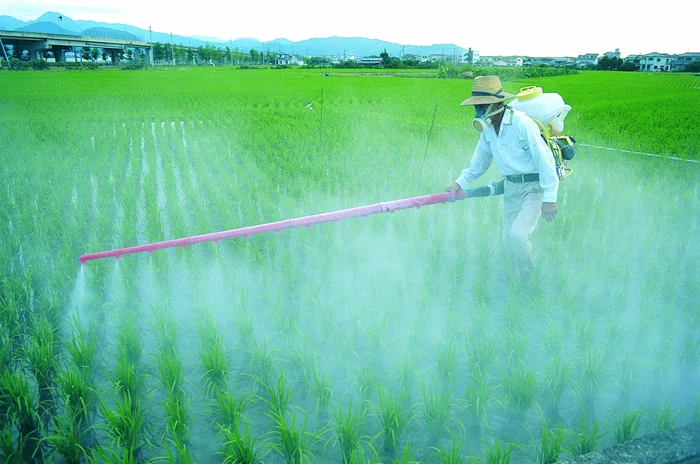
Due to a number of factors, Japan is running short on rice, experiencing its lowest rice stocks in over 20 years.
For the last three years, production has not kept up with demand. Consumers are struggling to find enough rice on grocery shelves, and many stores have limited purchases to one bag per family.
Video Spotlight:
- What's behind Japan's rice shortage? (Aug 27, 2024, NHK WORLD-JAPAN)
This post is based on the CNBC post, Japan’s largest rice shortage in years is exacerbated by sushi-hungry tourists, weather, by Lee Ying Shan, September 24, 2024; the Food Institute article, Japan’s Rice Shortage Prompts Concerns as Stocks Reach 25-Year Low, by Marcy Kreiter, September 30, 2024; the Newsweek article, Japan is running out of rice, by Anezka Pichrtova, September 7, 2024; and the YouTube video in the Spotlight. Image source: Digital Vision/Getty Images
Discussion Questions:
1. What capacity issues are currently driving this shortage?
Guidance: The amount of land being used for farming rice has decreased somewhat in recent years as older farmers retire and younger people don’t want to take their place. Also, Japanese consumers broadened the types of food they opt to eat over the years, resulting in lower rice consumption and a belief that it was not necessary to grow as much. Since 2014, Japan’s rice consumption has in fact dipped by about 100,000 tons a year. In addition, the 2023 crop was negatively affected by both heat and drought in the second half of the year. The harvest, though large, was of lower quality. Just under 60 percent was good enough to be rated as “high quality.” Furthermore, the Japanese government has pushed farmers to grow rice for animal feed instead of table rice.
2. In what ways has demand changed in recent years?
Guidance: Despite the aforementioned decrease in demand for rice, more recently, demand has increased for a number of reasons. Japan welcomed its largest surge of tourists ever this year, in part because the weaker yen has made it more attractive. These visitors have more than doubled the amount of rice typically eaten by tourists. In addition, Japanese consumers have been stockpiling rice in front of typhoon season and warnings of the potential for a major earthquake. Furthermore, just seeing empty shelves and watching the news about lack of availability may prompt consumers to overbuy when they see the scarcity of bags on the shelves, perhaps going to different stores if they are limited to one bag in each.
3. In what ways does aggregate planning for agricultural products differ from manufactured goods?
Guidance: Aggregate planning looks two to 18 months out into the future, seeking to roughly match supply and demand. With manufactured goods, factors which can affect a company’s ability to increase its capacity include such things as physical space, equipment and material availability, worker constraints, and the perishability of the product.
With agricultural products, however, growers are further limited by the number of growing cycles per year. The timeline for planning may be an entire year out, and once a crop is in the ground, it is not possible to increase the planned production until the next growing season. In the case of rice, there is typically one crop per year. Thus, in the short term, it is difficult for Japan to correct its imbalance of demand for rice and capacity to grow it.
In the near term, looking at importing rice from other places, including Calrose rice from California, is one way Japan is seeking to increase its supply. However, the heavy tariffs that Japan imposes on imported rice may to some extent limit imports, though Calrose appears to be affordable relative to other options available in Japan. Japanese consumers, however, can tell the difference between Calrose and the sweeter, stickier variety that they normally use for table rice. One longer term solution is for farmers to develop rice varieties that can better withstand hot weather and drought.
The Japanese government has suggested that as the rice harvest begins this fall, the shortage will lessen, but that remains to be seen.

